



Printer Friendly VersionEmail A FriendAdd ThisIncrease Text SizeDecrease Text Size
July 2007 Issue

Echoes of the Past

Delaware author Robert Olmstead explores war and family ties in his new novel, Coal Black Horse.
Linda Feagler


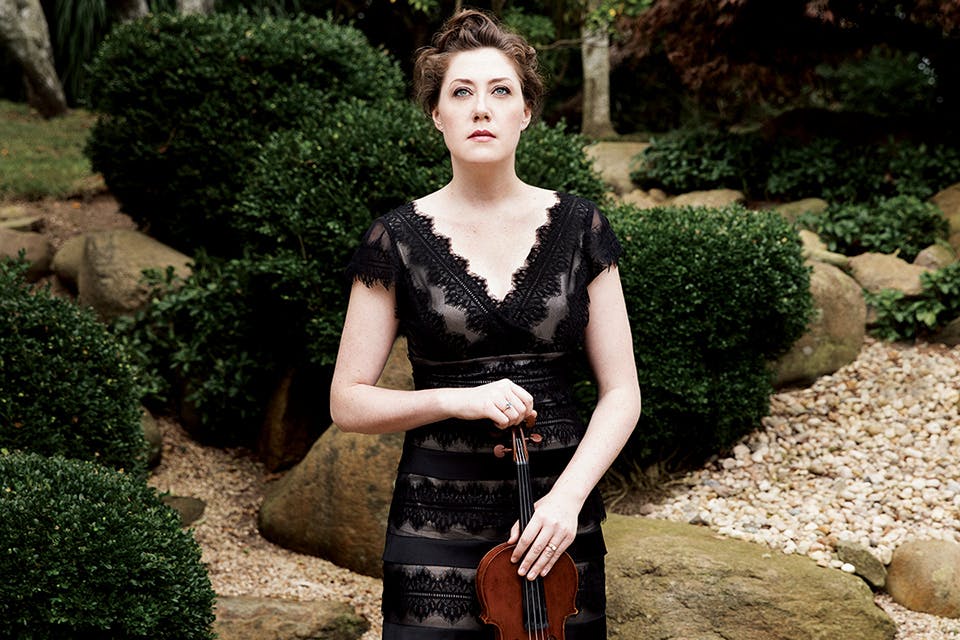
Robert Olmstead, author
of Coal Black Horse
Photo by Michael Houghton

The ghosts of Gettysburg were calling to Robert Olmstead. When he wasn't teaching writing at Dickinson College in Carlisle, Pennsylvania, the young professor would journey to the battlefield 30 miles away. He still remembers visiting one chilly autumn evening after the tourists had departed and the heat of the day had left a shroud of fog behind. The fields of corn appeared wraithlike in the moonlight, as a gentle breezewafted over the land. Suddenly, a herd of 30 deer appeared on the crest of a hill where soldiers once fought.

It's an image that will stay with Olmstead forever.

"Gettysburg. 50,000 casualties. We don't teach it. We don't learn it," he says. "I felt there were so many stories there that were left untold.
"I guess you could say I felt a calling."

Olmstead, 53, now a professor of writing at Ohio Wesleyan University, has infused the resonance of that time period and the uncertainties of war into his sixth and latest book, Coal Black Horse, published this year by Algonquin Books.

Like Civil War novelist Stephen Crane before him, Olmstead tells the story of a youth forced to witness the brutality of battle. Coal Black Horse also explores the bonds between father and son: 14-year-old Robey Childs is ordered by his mother to leave their Virginia farm, search for his father on the battlefield and bring him home. "You must find him before July," she urges Robey, as if prophesying the bloodbath of Gettysburg that was to come. To help the youth in his mission, a neighbor presents him with a magnificent black steed that becomes both protector and guiding light.

The father-son bond is one that resonates in Olm-stead's own life. It was forged on his family's dairy farm in Westmoreland, New Hampshire. Olmstead and his dad, James Paul, spent Saturdays at the redbrick, one-room schoolhouse that had become the town library.

"My dad took me to books at a very young age," he says. "New Hampshire is a quiet, cold state and the nights are very long. I found that with books there was a resonance, a connection. I could go anywhere in time or place. My mind really responded to that.

"I began to have this thought at an early age that if I could do for other people what these writers had done for me then, gosh, what a wonderful thing that would be."

Olmstead left New Hampshire to study writing at Syracuse University where, he adds proudly, Stephen Crane also was a student before penning his Civil War classic, The Red Badge of Courage, published in 1895. Olmstead's mentors included the late master of short-story fiction, Raymond Carver, and Tobias Wolff, best-known for This Boy's Life. It was fellow student Jay McInerney, author of Bright Lights, Big City, who showed the manuscript for Olmstead's first book - a short-story collection called River Dogs - to his editor.

His writing career was thus launched - a passion he's found is best pursued just before dawn in central Ohio.

"With the noise of life, it's a real labor to get to that silence when you can begin to hear your mind," he says of his writing routine, which requires rising at 4 a.m. to work steadily for five or six hours at the dining room table. "There's a kind of susceptibility, a state of dream melt that I have found to be a wonderful, fertile time."

It was during those morning marathons that Coal Black Horse took shape - a demanding effort that took 10 years to produce.

"I wanted to erase myself from the work," he explains. "Those early drafts were just chock-full of a thousand delights and idiosyncrasies that are mine, and the manuscript went up into the hundreds and hundreds of pages. And then I began the long process of taking those out.
"As a teacher," he continues, "I've taught students for years and have challenged them. I could do no less with myself."

That meant finding a way to portray the harshness of war and its aftermath in a relevant manner - one that is meant to spur readers into asking themselves if there is a way to achieve freedom without violence.

"We still have this obsession with blood sacrifice," Olmstead says sadly. "In the Civil War, we liberated a group of people, and came to the rightful conclusion that one set of human beings should not own another set of human beings. But we forget that we had to kill a million of each other to come to that conclusion.

"Did we really have to do that?" he asks. "The answer is either yes we did or no we didn't. Both of those answers are cause for soul-searching and deep, provocative questions about who we are as human beings."
 
 
Related Categories


Subscribe
COMMENTS
Be the first to leave a comment.
ADD YOUR COMMENT


Copyright © 2013 Ohio Magazine All rights reserved. | webmaster@ohiomagazine.com
1422 Euclid Avenue Ste. 730 Cleveland OH 44115