




March 2005 Issue
Animal Magnetism
Ohio zoos offer new opportunities for meeting other species.
Jill Sell
It's a jungle out there. Together, Ohio's major zoos house more than 17,770 individual animals (not counting invertebrates), and successful breeding programs and research have helped increase local populations and aided in worldwide conservation efforts.
Whatever the season, zoos are also a popular family-friendly destination, filled with opportunities to learn about other inhabitants of this planet.
If it has fins, fur or feathers, chances are it can be found at an Ohio zoo. Here's what new at the zoos this year.
Akron Zoo
The Akron Zoo may be Ohio's smallest and youngest zoo. But there aren't too many other zoos in the world that in the past five years have doubled in size, added 24 percent more animals and 70 percent more exhibits, and opened a new visitors center. And visitors have responded to the changes. Last year, the 50-acre zoo set a new annual attendance record, topping 150,000 people for the first time.
This Memorial Day weekend, the 52-year-old zoo will open "Legends of the Wild," a unique exhibit area that visitors enter by walking under a 30-foot waterfall. Fifteen new exhibits will feature endangered snow leopards, as well as jaguars, snakes, ring-tailed lemurs, Andean condors, fruit bats and insects.
"Legends" is unusual because unlike many traditional zoo exhibits that focus on animals from one or two regions, these critters are from around the world. The connecting theme is that the animals are the subjects of myths and legends in different cultures. (Did you know, for example, that we can thank the jaguar for holding up the sky? That's the Mayan legend, anyway.) Current scientific information for the animals will also be posted.
The zoo's new Komodo Kingdom Education Center will open this fall. Here, the spotlight is on the largest lizard in the world, the Komodo dragon, known for its sharp teeth and poisonous saliva. Chinese alligators and Galapagos tortoises will also be part of the menagerie. The center includes classrooms, a resource library, interactive displays and indoor and outdoor eating areas.
"We'll never have the really big animals like elephants or giraffes here," says David M. Barnhardt, director of marketing and guest services for the zoo. "But we know our niche. And that's getting really close to the animals. Our exhibits are designed so you can go nose to nose with a sun bear. You won't get any closer to the animals anywhere else in the world."
That means visitors will have the opportunity to get acquainted with the zoo's more than 400 animals, including the Chilean flamingoes acquired from the former Six Flags Worlds of Adventure in Aurora. Babies born last year now in residence include 10 poison froglets, three pygmy goats, one Humboldt penguin, six cape shelducks and four black swans.
Akron Zoo, 500 Edgewood Ave., Akron, 330/375-2550. www.akronzoo.com. Open 11 a.m.-4 p.m. daily except major holidays. Admission $8, seniors $6.50, children 2-14 $5; parking $1.50.
Cincinnati Zoo & Botanical Garden
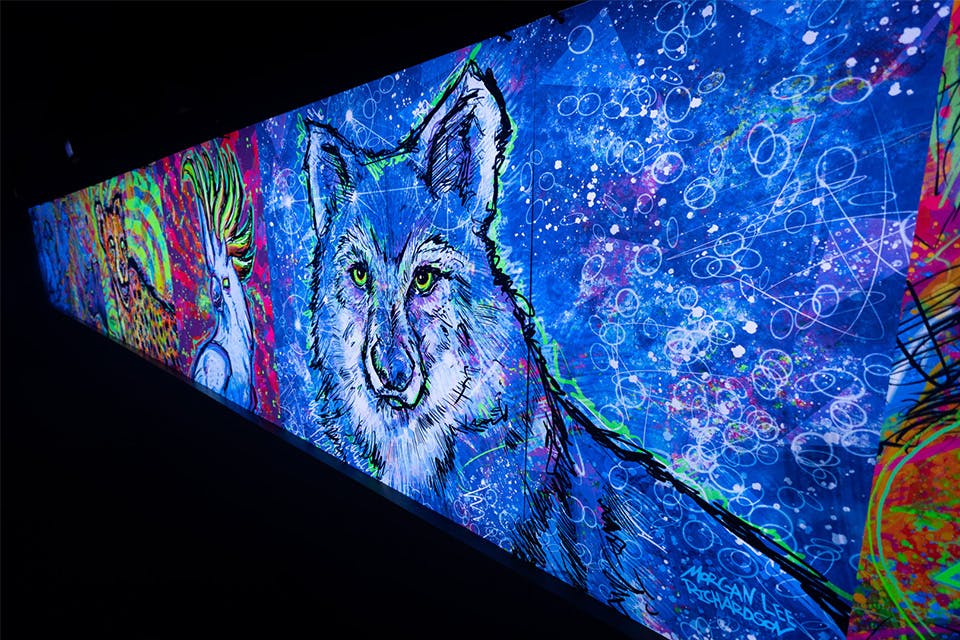
Some 54 Mexican wolves remain in the wild, according to the U.S. Fish and Wildlife Service. An additional 282 live in zoos. The endangered Mexican wolf is the rarest sub-species of the gray wolf in North America and is one of the smallest in size.
The wolf's home turf once included central Mexico, as well as parts of New Mexico, Texas and Arizona. When deer and elk populations declined, the wolf turned to domestic wildlife for food. In response, it was hunted by man until the 1950s when it was completely eliminated in the wild.
Beginning Memorial Day weekend, visitors to the Cincinnati Zoo & Botanical Garden will have the opportunity to see two female Mexican wolves. Wolf Woods, a permanent exhibit located in the Children's Zoo, will be home to the wolves as well as other North American animals, including thick-billed parrots, gray fox and river otters.
According to Thane Maynard, vice president of public information, the zoo is part of the American Zoo and Aquarium Association's captive-breeding program that involves endangered species. Two male wolves will be acquired at a later date to join the 6- and 7-year-old females. In 1977, the U.S. Fish and Wildlife Service began to reintroduce Mexican wolves to parts of the American Southwest.
The Mexican wolf area of Wolf Woods is designed as a trapper's cabin reclaimed by biologists as a field research station. The wolves can be viewed from an outdoor deck as well as windows. Hands-on activities for children include learning about animal tracks and wolf pups.
Established in 1875, the zoo is the second oldest zoo in the United States, and is known worldwide for its conservation efforts. It is the only zoo to breed the Sumatran rhino, the most endangered species in captivity. (Rhino Mother Emi became the first Sumatran rhino to give birth to two calves in captivity when her second was born in 2004.)
The 75-acre Cincinnati Zoo is also the only zoo to breed the Steller's sea eagle, according to Maynard. Among its many other firsts: first California sea lion born in captivity (1878); first giraffe born in the Western Hemisphere (1889); first zoo in the United States to open an insectarium to exhibit live invertebrates (1978); and first elephant to be conceived and born in Ohio since the woolly mammoths (1998). In addition, the Botanical Garden can boast of more than 3,000 varieties of plants.
Cincinnati Zoo & Botanical Garden, 3400 Vine St., Cincinnati, 800/94-HIPPO. www.cincinnatizoo.org. Open: 9 a.m.-5 p.m. daily except major holidays. Admission $12.95, children 2-12 $7.95; parking $6.50.
Cleveland Metroparks Zoo
Turtles feeling a little sluggish and jaguars not quite up to speed will receive world-class medical care this year when the Sarah Allison Steffee Center for Zoological Medicine accepts its first patients. The $9.1 million, 24,000-square-foot center is located in the African Savanna area of the 168-acre Cleveland Metroparks Zoo.
The center's Reinberger Learning Lab includes a theater, walk-through exhibits and lots of hands-on activities. Visitors learn how the zoo helps raise babies, about everyday animal care (including nutrition, hygiene and immunizations) and special care (veterinary treatments and research). Emphasis is also placed on the sensitive issue of "care at the end" with exhibits on aging and death.
But the most incredible opportunity for visitors will be the ability to watch medical procedures through large glass windows that look into the center's operating rooms. If a red-crowned crane swallows coins that some unthinking visitor threw into its habitat, or a gorilla injures a foot, visitors can often watch the surgeries.
Of course, the windows can provide only a small peek at the important activities of the center. Albert Lewandowski, one of the zoo's two full-time veterinarians, believes the center's work will help protect the zoo's 3,000 animals representing 610 species from quickly spreading diseases such as West Nile. Superior diagnostic equipment (billed as the first CT scanner used in any zoo), a state-of-the art endo-crinology lab, quarantine capabilities and hospital-like rooms designed for animals that swim, walk, slither, hop or fly also contribute to the animals' care.
"In 50 years, this building has to be as good as it is now," says Dr. Lewandowski. "The equipment will change, but we wanted to make sure that the structure itself would always serve the animals. It's not the biggest or the most expensive veterinary facility, but we think it's the best."
The building's details make the difference: Sick animals can lie on heated floors; skylights bring in natural light; tough, nontoxic, easy-to-clean stall doors are made from recycled plastic. There are also plenty of outdoor runs and an emergency lighting system.
"The back-up lighting is so I'm not doing surgery on a big cat while I'm holding a flashlight," says Lewandowski.
Despite the high-tech capabilities of the center, some things never change: You'll find lots of big shovels throughout the building.
Up next on the drawing board: The Elephant Oxbow exhibit, a naturalistic habitat that will be the zoo's biggest expansion since The RainForest opened in 1992.
Cleveland Metroparks Zoo, 3900 Wildlife Way, Cleveland, 216/661-6500. www.clemetzoo.com. Open daily 10 a.m.-5 p.m. except major holidays. Admission $9 for ages 12 and older, children 2-11 $4; free parking.
Columbus Zoo and Aquarium
Hundreds of romaine lettuce leaves, looking like fancy lily pads, float on top of the water in the 190,000-gallon aquarium in Manatee Coast, which opened in 1999. The lettuce is the favorite food of the Columbus Zoo and Aquarium's three West Indian manatees: Dundee, Turtle and Gene. The massive marine mammals eat 300 pounds of lettuce a day, accounting for 85 percent of their diet.
"A female manatee can weigh 3,000 pounds. So much for eating salads," jokes Dave Ackerman, head zookeeper for the manatees. "People think manatees are fat, but they're really not. Most of the day, though, they do just eat, play and sleep."
That's a rather calm life for the endangered animals, of which there are only 3,000 left in the wild. About 300 are killed each year by powerboats. The Columbus Zoo, which has a partnership with the United States Fish and Wildlife Manatee Rehabilitation and Recovery program, can accommodate five adult manatees. The Columbus aquarium is one of only three facilities outside Florida to care for and exhibit West Indian manatees. Visitors to the aquatic habitat literally come face to face with the aquatic mammals (separated only by glass) and can also view birds, fish and turtles.
Although the manatees (whose skin feels like "a wet basketball," according to Ackerman) are a big draw at the zoo, visitors can also enjoy Voyage to Australia and the Islands of Southeast Asia. The zoo's newest exhibit was completed in 2004, and features koalas, kangaroos and a lorikeet aviary, as well as gibbons, orangutans and a nocturnal building where dog-faced fruit bats hang upside down.
The 586-acre Columbus Zoo opened in 1927 and became famous in 1956 when Colo, the world's first captive-born gorilla, entered the world here. Today, the zoo houses more than 660 species and more than 7,800 specimens.
Under construction is the zoo's new, yet unnamed Asian Region that is scheduled to open in 2006. In the meantime, check out the three baby Komodo dragons that were born in December, and Bodhi, the male Asian elephant calf who was born at the zoo in April 2004. And if you're lucky, you may see Jack Hanna, the zoo's director emeritus. Right — that Jack Hanna of television fame.
Columbus Zoo and Aquarium, 9990 Riverside Dr., Powell, 614/645-3550. www.columbuszoo.com. Open daily 9 a.m.-5 p.m. Admission $9, seniors over 60 $7; children 2-11 $5; parking $3.
Toledo Zoo
Throughout the centuries, the dragon has captured the imaginations of children and adults like no other creature. From the lovable Puff the Magic Dragon to the evil, damsel-kidnapping beasts of fairy tales, the dragon has had many personalities. Stories of the winged, fire-breathing, green-scaled serpent are found in many cultures as both a revered and terrifying creature.
In other words, what a great idea for a new zoo exhibit.
"Dragons" opens April 15 in the Museum of Science building at the 74-acre Toledo Zoo. A combination of mythological dragons and live animals with the word dragon in their names, the exhibit is suitable for all ages. It is divided into two sections: unofficially the so-called "friendly" dragons and the "scary" dragons. Parents can choose to visit one or both sides of the exhibit, depending on the ages and maturity level of their children.
In the building's Lesser Hall, the live animals will include a Komodo dragon, weedy sea dragon, leafy sea dragon, dragon wrasse, Atlantic dragon, moray eel and dragonet (a type of fish), as well as many others. The Great Hall will be dedicated to the myths, lore and cultural dragons found throughout the world.
This year, visitors to the zoo can also see four cheetah cubs, born last June and introduced to the public on a limited basis in December.
The Toledo Zoo opened in 1900 with the donation of a single woodchuck to the City of Toledo's Parks Board. Today the zoo is considered one of the "most complete zoos in the country" because of its variety of mammals, reptiles, avian and aquatic exhibits, as well as its gardens, according to Andi Norman, assistant director of marketing and public relations.
The $20 million, 12-acre "Africa!" exhibit that opened last year is the largest project in the zoo's history. Highlights include 14 different animal species, 13 authentic-looking African buildings and the world's first and only all-African-animal carousel. Other popular exhibits at the zoo include the world-famous Hippoquarium — the first of its kind in any zoo — and the Kingdom of the Apes. In addition, five Spanish-style buildings that were built by the Works Progress Administration during the Depression are still in use at the zoo and are considered historically significant.
Toledo Zoo, 2700 Broadway St., Toledo, 419/385-5721. www.toledozoo.org. Open daily 10 a.m.-4 p.m. except major holidays. Admission $9, children ages 2-11 years and seniors 60 and over $6; parking $5.
Be the first to leave a comment.