




Printer Friendly VersionEmail A FriendAdd ThisIncrease Text SizeDecrease Text Size
April 2007 Issue

Everything's Rosy

Columbus Park of Roses blooms with Ohio favorites.

A gentle giant of a man, Charles "Skip" Turner stoops to pluck a wayward weed from the bevy of beauties before him. It's early morning at Columbus Park of Roses, a fragrant sea of floral magnificence located only five minutes from the bustling Ohio State University campus.

For the 6-foot-tall vice president of Columbus' four-hospital Mt. Carmel Health System, it's his favorite part of the day, a period that Turner, who's been a volunteer at the park for 25 years, sees as the ultimate stress-buster: a time to stop and smell the roses - no small feat since that means meandering down the paths that flank the 11,000 rose bushes planted throughout the park's 13 acres.

"This is my time," he says, "when the dew is still on the roses and they are most fragrant."

The park has served as a peaceful oasis to locals and out-of-towners alike since its grand opening in June 1953. Although the grounds also feature gardens filled with herbs, daffodils and perennials, the roses are clearly the main attraction: So much so that the park was included on USA Today's 2006 international list of "10 places to admire the bloom on the rose," ranked with Sissinghurst Castle Garden in Kent, United Kingdom, and the La Roseraie de l'Hay du Val de Marne near Paris.

Backyard gardeners come here to dream about the possibilities (which is easy to do since the park features only plants that will survive in our climate) or preview the as-yet-unnamed All-America Rose Selections that are given a trial run in the test garden before making their national debut the following year.

"The AARS sends us two to four new rose varieties to plant each year," Turner says proudly. "We're strongly discouraged from identifying them as being society selections, but people can actually see them for the first time. However, if the bed does terribly, we don't replant them. We say, 'OK. Gone.' The fact that they are an All-America selection doesn't mean they will do well in Ohio." (His favorite from this year's crop, Strike It Rich, a hybrid tea rose with a vibrant yellow hue and spicy fragrance, passed with flying colors.)

But sight and scent are not the only attractions here. Turner enthralls groups of visitors with stories about the people and places behind the posies: how Crusaders returning to Europe during the Middle Ages brought not only tales of valor from Damascus, but also the flower that the world would come to call the Damask Rose, valued by growers for its numerous buds and by perfumers for its intense scent. How during the Gay '90s - long before the long-stemmed hybrid tea came into fashion as the symbol of fidelity - financier and snappy dresser "Diamond" Jim Brady would present his favorite Gibson Girl with an American Beauty, known for its heavy, cloying aroma.

"And you can imagine how kids just love to hear about the War of the Roses, something we've all studied in school," says Turner, offering background information about the series of conflicts waged over the throne of England between the Lancasters, whose family shield bore a red rose (Rosa Gallica Officinalis), and the Yorks, who sported a crest emblazoned with a white one (Rosa Alba). "There they are, smell 'em," he'll always suggest to students' wide-eyed amazement, pointing to the bed a group has gathered around during a field trip.

And although they smell wonderful, the nearby yellow Rosa Foetida does not. The name is related to the word fetid, and it's easy to see why, since one whiff brings with it the image of rotting meat.

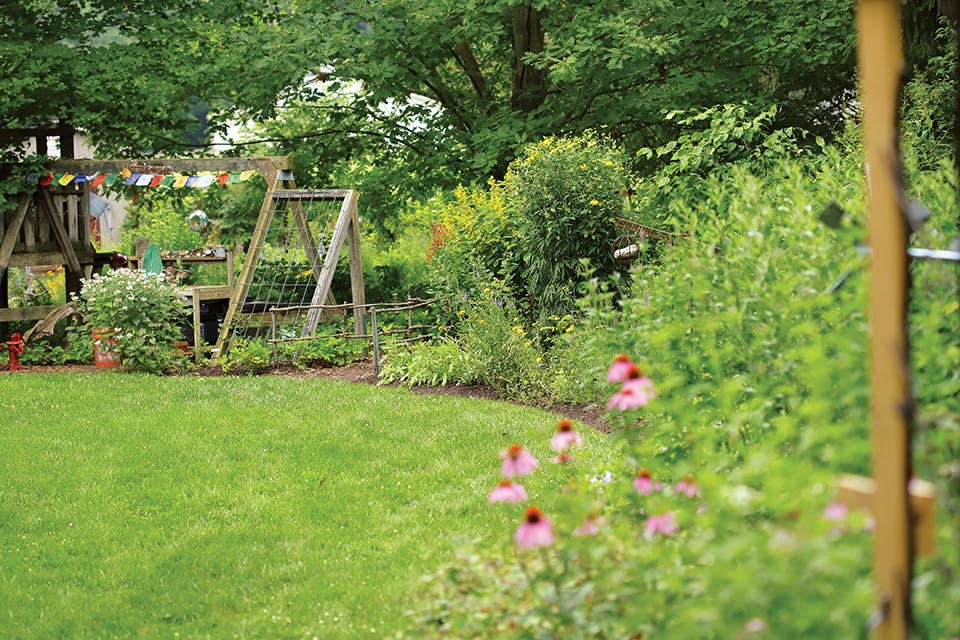
At home in Bexley, Turner's passion for antique roses is reflected in his backyard garden, replete with magenta-pink Zéphirine Bourbon roses and New Dawn, the first plant ever to receive a patent. As he lovingly mulches and prunes, Turner explains why their allure is irresistible.

"Roses have always been the most popular flower of human beings," Turner muses. "If you look in Neanderthal graves, there will probably be roses there. There is no other plant or flower that has so much romance and history attached to it."

Click here for Slide Show

When You Go ...

Columbus Park of Roses, 3923 N. High St., 614/645-3350. Open dawn to dusk year-round. The best time to visit is March through October; rose gardens are at their peak in mid-June and mid-September. Admission is free.

See What‘s Blooming

Cincinnati Flower Show, April 21–29, features container and window-box gardens, along with tips on making an environmentally friendly back yard. Call 513/872-5194 or visit www.cincyflowershow.com for more information.

Cleveland Botanical Garden Flower Show, May 24–28, the largest outdoor flower show in the United States, modeled after the Royal Horticultural Society’s Chelsea Flower Show, includes themed spaces mixing music and gardening. Call 216/721-1600 or visit www.cbgarden.org.

Columbus Rose Festival, June 9 and 10, at the Columbus Park of Roses, spotlights preservation of plants and the environment.

TIPS FOR GROWING ROSES

1. Preference: "People see roses in catalogs and say, 'Oh, wow. This looks like a wonderful rose. And yes, it does," Turner says. "But since it was grown in Texas, it may not live through next winter. So be sure to choose varieties that will do well in our climate. Shrub roses as a family are the hardiest." (Those whose thumbs are not green will want to visit the Park of Roses' new no-maintenance Earth-Friendly Garden debuting at the Columbus Rose Festival.)

2. Purchase: At the nursery, keep in mind that all roses are not created equal. Read the label to understand the characteristics of the ones for sale. "One might only grow 3 feet high, and the one [placed] next to it might eventually reach 10 feet high," Turner says. "Know what you're buying."

3. Plant: Roses need to breathe. Planting them too close together can lead to the formation of powdery mildew. Follow spacing requirements indicated on the plant label.

4. Preservation: "Roses like to have a lot of water, but they don't like to have wet feet," Turner says. It's best to thoroughly water bushes twice a week, and allow for drainage. Roses need sun and plenty of it, at least six hours per day.

5. Prune: Sometime after the first hard frost, cut back rose plants to about 24 inches. This makes them easier to work with and prevents damage from wind and ice.

 
Copyright © 2013 Ohio Magazine All rights reserved. | webmaster@ohiomagazine.com
1422 Euclid Avenue Ste. 730 Cleveland OH 44115