





Printer Friendly VersionEmail A FriendAdd ThisIncrease Text SizeDecrease Text Size
December 2007 Issue

Haus of Hospitality

Chef Hubert Seifert, chef/owner of Spagio in Columbus, shares his kitchen-table wisdom.
Haus of Hospitality
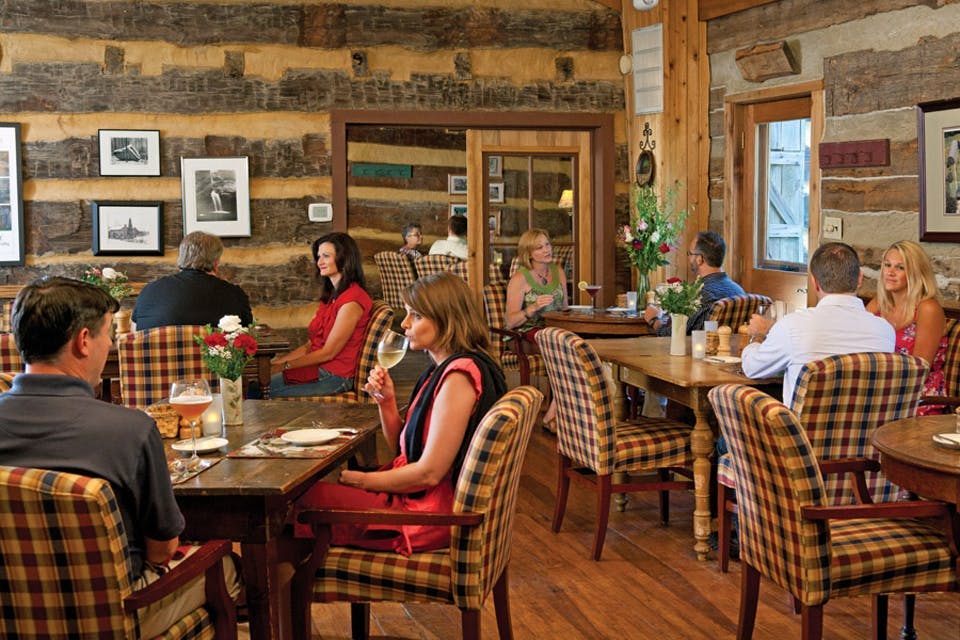
First-time guests to Chef Hubert and Helga Seifert’s Columbus home quickly discover that, around these natural-born entertainers, you’re never a stranger for long.

Some of us learn this the hard way.

Minutes after arriving for a tour of the couple’s kitchen, my black ballet flat catches on the room’s back door, and I find myself face-to-face with one of its amenities — the hardwood floor. After helping me up and checking for serious injury, the 60-year-old German-born chef and owner of Spagio — the acclaimed European and Pacific Rim-influenced restaurant in Grandview — straightens himself and jokes, “I’m sorry I am so handsome that you lose your footing.”

It is this playfulness, paired with their effortless sense of hospitality, that has made the couple’s home a regular gathering place for groups of friends since they purchased the property more than 20 years ago. It’s impossible to imagine that anyone would decline an invitation to dinner here  — more likely, you would fight for one. Cloaked by acres of hardwood forest, the Seiferts’ 1920s country home formerly functioned as a rural retreat for the Lazarus family of department-store fame. Their once-tranquil street now sees thousands of cars each day, but the moment you slow your vehicle down to slip into the drive’s tree-flanked entrance, the home practically demands you do the same.

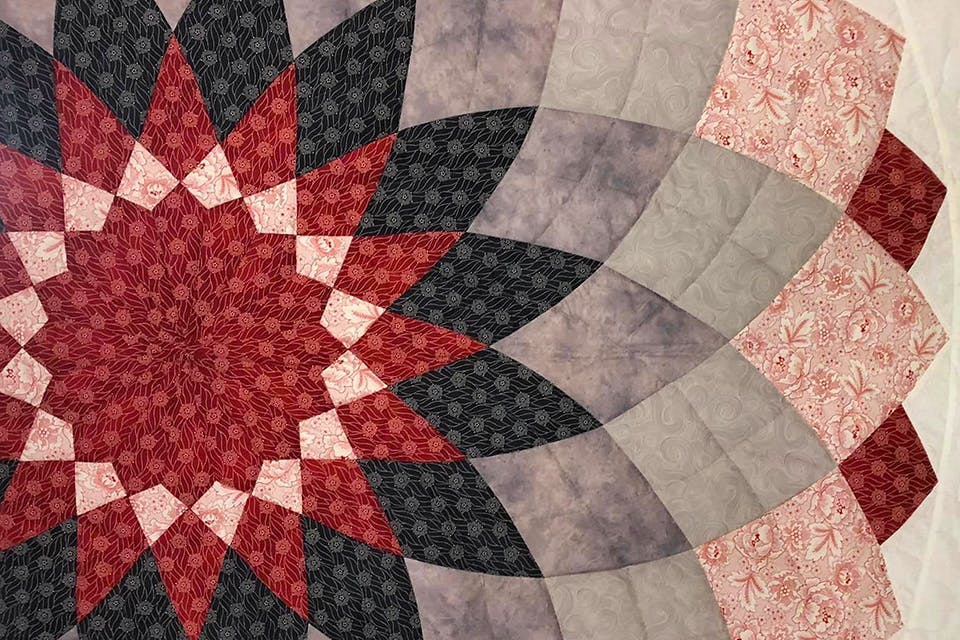
“I leave my stress at the front gate,” nods Helga, leading me through the wide hall to the back of their home. The interior is equally arresting, decorated liberally with mammoth oil paintings, exquisite quilts and other artistic pieces, diverse and plentiful enough to convey the same characteristics in the experiences of the home’s  owners. It’s clear the couple of 38 years prefers to surround themselves with life’s simple pleasures.

The same can be said of their kitchen. The room is really two rooms, functioning as a symbiotic collection of tools, appliances and workspace that is nothing short of a culinary wonderland. The spaces — which, loosely distinguished, function as a place for prep work and a place for cooking, respectively — are joined in the middle by a doorway big enough to make the remaining wall function more as a design element than a partition. The outer wall of the prep area is counter-to-ceiling glass, drawing in plenty of natural light and an unobstructed view of the surrounding forest and its residents.

“We did the remodeling about 12 years ago,” says Chef Hubert, explaining that the room was once an outdoor porch. “One day, a friend came over and he said to me ‘Hubert, this whole thing doesn’t work— you need a real kitchen,’” he laughs. “He said ‘I’ll go home, get some tools, and we’ll go for it.’” The friend returned an hour later with a sledgehammer, and the rest is history.

Today, the kitchen flawlessly walks the line between form and function, with clear indications that it’s a chef’s workspace, not a showplace. The stove is a six-burner gas unit made by Jade, fitted with an exhaust hood and a stainless-steel backsplash for safety. Utility shelves surround the stove, and ladles, seasonings and a stunning 21-piece collection of copper pots and pans all hang within easy reach. “I like to cook with copper,” he says, adding that most of his collection was acquired over the years on trips to Zabar’s, the famed gourmet store in New York City.

Countertops in both rooms are granite, which Chef Hubert jabs at with a chef’s knife to demonstrate that they’re hard-to-scratch, not to mention easy to clean and capable of handling high heat.

The walls separating the two rooms are double-paned glass windows, acquired at a downtown construction site. Chef Hubert filled the glass with two landscape-like designs, one made from rice, black beans and lentils, the other with different grades, roasts and colors of coffee beans. “I would never have thought of that,” says Helga. “That’s all Hubert.”

Instead of kitchen cabinets, maple drawers, installed below waist level, hold pantry items and kitchen tools. “I like to open drawers, look down in and see everything I’ve got,” he explains. “Plus, it’s easier when you get older.” Considering that the couple can, and often does, entertain 30 guests for a sit-down dinner, even more surprising is the absence of an automatic dishwasher. “That spot right there is so peaceful,” says Helga, gesturing to the sink positioned squarely in front of the windows. “If we have lots of dishes, I don’t mind.”

Although most of the rooms’ contents have a direct purpose, there are a few exceptions. “I collect two things — pigs, I have 75, and cookbooks, I have about a thousand,” he says. Glass shelves in the prep area hold a few of his pigs, which the chef explains are considered lucky in Germany, as well as items from his collection of tools that only a chef would have, including seven ceramic hens in a nest that function as pâté molds.

“I think cooking should bring people together,” he says. “Here, we shop together, we peel the potatoes together, we cook together, then we eat together. This, for me, is quality time.”

With a restaurant that just celebrated its 26th anniversary, the Seiferts’ busy lives don’t leave as much time for family and friends as they might like. But on days off, it’s clear that their home is their sanctuary, and for this gift, they are grateful.

“There’s not a day,” Helga says, looking past the countertops and accessories and into the wooded ravine that surrounds her home, “that I don’t say ‘thank you’ that I live here.”


RECIPES
 
Roast Turkey with Bread Pudding
 
For the turkey:
1  12–15 pound turkey, halved and de-boned, keeping leg bones attached
2  sticks butter, softened
3  tablespoons lemon juice
2  tablespoons fresh thyme, chopped Kosher salt
Black and white pepper
3  garlic cloves, chopped
For the bread pudding:
2  tablespoons butter
3  eggs, beaten
3  cups milk
¼  cup cooked bacon crumbles
1  tablespoon roasted garlic, chopped
2  tablespoons parsley, chopped
2  tablespoons green onion, chopped
Salt and black pepper
6  cups white bread, cut into ½-inch cubes
 
DIRECTIONS:
Preheat oven to 350 degrees.

In a bowl, combine butter, lemon juice, thyme, salt and white pepper. Refrigerate for at least 15 minutes. Season the turkey with salt and black pepper. Gently rub the butter mixture and the garlic under the skin. Place turkey halves in a roasting pan, and roast for one hour (or to an internal temperature of 160 degrees).

Butter six 4-ounce ramekins. In a large bowl, whisk the eggs and milk. Add the bacon, garlic, parsley and green onion and season with salt and pepper. Add the bread cubes and let sit until the liquid is absorbed. Spoon the bread mixture into the ramekins. Place them in a large roasting pan and fill the pan with water half way up the ramekin sides. Bake for 45 minutes. Raise the temperature to 400 degrees and bake 10 more minutes.
 
Apple Brulee
 
For the shell:
1½  cups flour
½ cup butter
3  tablespoons water
 
For the filling:
2  apples, peeled, cored and coarsely chopped
2  tablespoons water
6  egg yolks
¼  cup sugar
1½  cups heavy cream
 
For the topping:
1  apple, peeled, cored and thinly sliced
1  tablespoon lemon juice
¼  cup sugar
 
DIRECTIONS :
Combine the flour, butter and water to form a dough. Separate into six equal parts. Roll each piece out thinly to about 6-inch rounds, and gently press into individual 4-inch removable-bottom tart molds, cutting the overhang. Chill shells for at least 15 minutes. Preheat oven to 375 degrees. Remove shells from refrigerator. Cover each with wax paper and fill with pie weights. Bake for 10 minutes with weights and then for another 5 minutes at 350 degrees without the weights and wax paper.

Cook apples with water in a covered saucepan for 10 minutes to soften. Remove from heat and mash apples. In a separate bowl, beat the yolks with the sugar. In a saucepan, heat the cream to just below the boiling point. Slowly whisk in the egg mixture. Remove from heat, strain the custard into the mashed apples and mix well. Pour the mix into the shells and bake for 15 to 20 minutes. Let cool.

Before serving, remove pies from molds. Lay the sliced apple decoratively over the pie and sprinkle with sugar, then use a kitchen blowtorch to caramelize, or place under the broiler, being careful not to let the sugar burn.


Related Categories


Subscribe
COMMENTS
Be the first to leave a comment.
ADD YOUR COMMENT


Copyright © 2013 Ohio Magazine All rights reserved. | webmaster@ohiomagazine.com
1422 Euclid Avenue Ste. 730 Cleveland OH 44115