


May 2009 Issue
Inner Tubes and Daylilies
Christy Nulsen Chafe

It is the crunch of the gravel under the tires that lets me know I have arrived. When I was little, I could feel it all through my body, stretched out in the “way back” of my family’s Buick Electra, in a giant fort of blankets and pillows, stuffed animals and duffel bags, in order to comfortably bear the two-hour trek up I-71 and across several state routes from Madeira to Indian Lake.
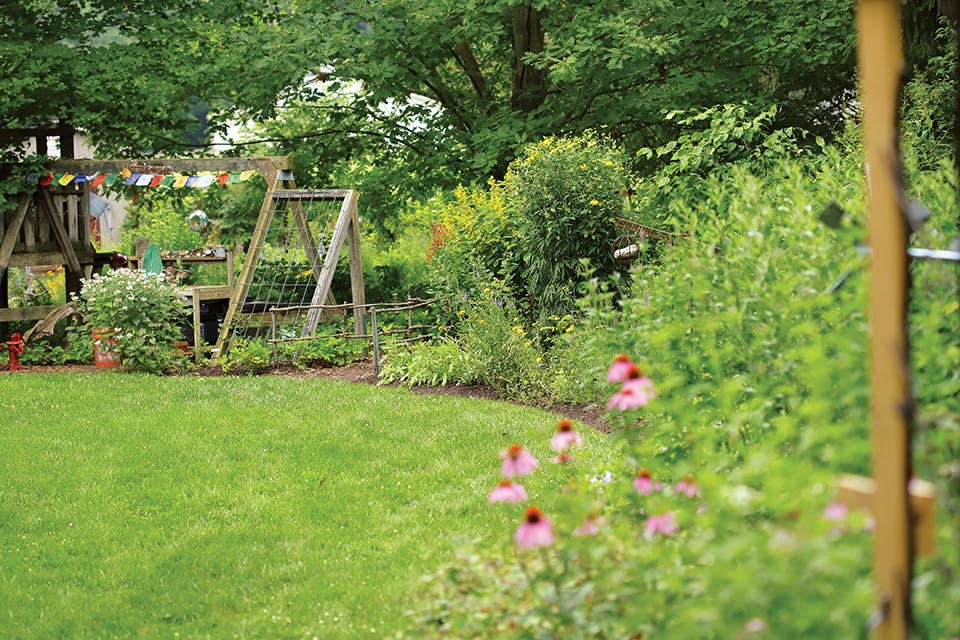
Now, when I arrive, I am in the front seat, but the same sound wakes me, as I have inevitably fallen asleep while my husband drives. A different trip now, driving south from Hudson, but the same arrival. Car doors fling open as my own children scramble out, freed from the confines of the minivan. They are across the yard and onto the dock before I unfold my legs and gather my sunglasses and water bottle. I can already see the orange daylilies from my car window — daylilies just like the ones I have planted in my garden at home to remind me of this place. I am anxious to exit the van and see the lake. It is summer. I have arrived.
Indian Lake is a 6,000-acre, man-made lake located 20 miles south of Lima and 50 miles west of Columbus in Russells Point, Ohio. Fed by both the north and south forks of the Upper Great Miami River, it is a vacation spot complete with bass tournaments, sailboat regattas, restaurants, a state park, rental cottages, beaches and islands; yet, most people have never heard of my lake. Perhaps this is why it has maintained its charm. With a sandy bottom and nonthreatening depths, this is a friendly lake with lapping shores, families of ducks, and a lily pond. I have been floating in the lake every summer for nearly 40 years, and I still turn to the water for peace, and occasionally for cleanliness, if there is Ivory soap floating nearby and time enough for a quick “lake bath.”
My parents met at Indian Lake in the summer of 1958. My dad was the blonde, suntanned lifeguard at Silver Isle beach, and my mother was the renter from a cottage down the lakefront, staying with her three sisters and mother. I’ve heard the stories my whole life. My aunt, my mother’s older sister, was the first one who actually met my dad at the lake, coming home to report back to my mother, “I’ve just met the man you’re going to marry.” The dates that followed were often in speedboats, or sometimes they danced at the Moonlight Terrace Gardens. I can imagine them water-skiing and swimming with friends and relatives, playing cards in the cottage kitchens and floating in big, black inner tubes, hot from the summer sun. There were nights spent at the amusement park across the lake, complete with a roller coaster, a Ferris wheel, and a boardwalk leading to Sandy Beach Island — all of which contributed to Indian Lake’s nickname, “Ohio’s Million Dollar Playground.”
Lifeguards grow up, marry summer renters and have children. Since it was my great-grandfather who built my family’s original cottage in 1919, my brothers and I became the fourth generation to enjoy Indian Lake summers.
These summers of our childhood were spent visiting the lake on weekends, rather than staying for weeks at a time like the generation before. The amusement park was shut down in the early 1960s; the dance hall had seen its decline even earlier, in the ’50s. But some things hadn’t changed at all. The lakefront view was certainly the same as when my grandfather’s family first broke ground on their cottage. From the patio of my grandparents’ home, you could see Turtle Shell Island and the always eagerly anticipated sunset. It is a sunset that still inspires my mother to take pictures nearly every night, certain that each is more beautiful than the one before.
We would arrive for our lake weekends, jump out of the car and run to the dock, ready to swim and already begging for our boat ride to Hinkle’s Donuts. My father taught me to water ski, my grandmother taught me to play Rack-O, and my grandfather taught me to love Limburger cheese, which he would serve from under a glass dome during cocktail hour. My grandparents’ friends from neighboring cottages would come for cocktails and cheese in the late afternoon, and we grew to expect that there would always be friends and family on the patio. Summer evenings were spent outside listening to the Reds’ broadcast on WLW, Joe Nuxhall and Marty Brennaman calling the game. My grandfather, my dad and my brothers would lean in anxiously, cheering or swearing accordingly.
There were fireflies to catch, burgers to flip, doughnut holes to throw at my brothers when they were water-skiing and the same inner tubes for floating.
The Memorial Day party, the Fourth of July fireworks and the Labor Day Ring of Fire (hundreds of orange flares shining around the 26 miles of Indian Lake shoreline) were annual events, but the Whiffle ball games were nightly extravaganzas. All ages were invited; if you could hold a plastic yellow bat, you were on a team. Cheers rang out and drinks were lifted in celebration as players ran to first base (the air-conditioning unit), second base (the third post on the fence), third base (the hand rail on the original cottage) and finally, home plate — a patch of dirt in the grass worn from years of use. Home runs flew across the street and balls often splashed into the lake. The games lasted long past dark, with the youngest teammates fiercely protesting against bedtime.
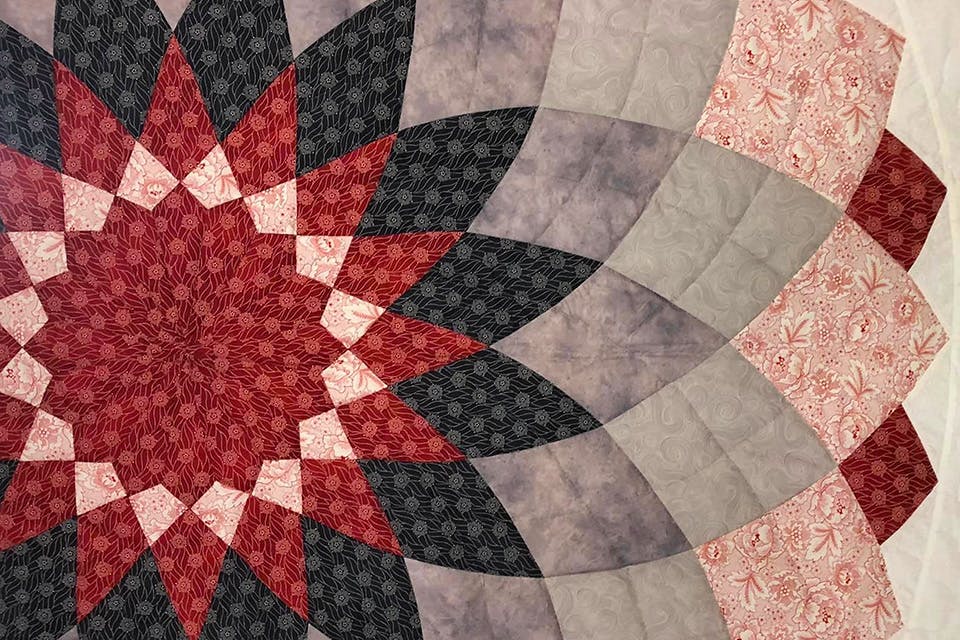
At night, my brothers and I would share one of the two upstairs bedrooms. The beds were soft and mushy — truly, one of my favorite places to sleep in the entire world. There was one blanket in particular — a white one, soft and thin, covered in pink roses.It was trimmed with satin on its edges, and I could usually manage to claim it during our weekend stays. I would fall asleep counting the days that remained in our lake vacation, always wishing there were more.
Indian Lake called us back, time and time again, and we were lucky enough to be able to answer.
Now that my brothers and I have families of our own, the lake calls to us and our children in a way that I always knew it would. My parents have renovated my grandparents’ lakefront home and expanded it so that yet another generation can come and experience what is, to our family, not only a summer home but a beautiful family history. Hinkle’s Donuts is no longer there, but in its place is The Donut Shop, and we go there by boat, the kids bouncing in their life jackets, awaiting their first sugar of the morning. Newly instituted outdoor theater nights were invented by hanging a white sheet on the boat dock and projecting a rented movie.
New traditions have begun, and some have changed slightly over time, but I tend to notice more what has remained. The lakefront cottages still celebrate the summer holidays in style; it’s a constant, a way to mark the passage of another year. I love watching my children floating in the old inner tubes, catching fireflies, taking lake baths and playing Whiffle ball. The sunsets are, as always, magnificent, and the Reds’ games still play on the radio. And, of course, there is cocktail hour: Cottage families, all generations, now congregate for conversations and parties. My late grandfather would enjoy knowing that we continue to have drinks and eat stinky cheese with his friends, our friends, from next door and down the lakefront.
The rose blanket is folded in the linen closet, and I pull it out when I am tucking in my children at night, just to see the familiar faded flowers covering one of them. While I am falling asleep, it is to the same sounds from my childhood — the same whirring of a fan, and the same waves against the rocks. I can close my eyes and so easily remember being a child in this place. I can almost as easily imagine how strongly this lake will call to my children when they are grown. I hope they will find the same joy here, in both the traditions and the possibilities that Indian Lake brings.
So once again, I have awakened to the crunch of the gravel. It is the view, unchanged, that I long to see. I walk around the corner of the house. There is already a yellow Whiffle bat lying across home plate. I look across the yard, over the daylilies — taller now, waving gently in the breeze — and there it is. The lake. It is summer. I have arrived.
Be the first to leave a comment.