








Printer Friendly VersionEmail A FriendAdd ThisIncrease Text SizeDecrease Text Size
March 2011 Issue

Journey Into the Past

Celebrate the National Road’s 200th birthday with a tour of significant sites along the route’s Ohio stretch.

When you travel the historic National Road in Ohio, you’re following in the path of pioneers and presidents, drivers and drovers.

Even today, as you follow its modern course on U.S. Rte. 40, you can see their footprints in the historic buildings, bridges, museums and cemeteries along the way. Their stories are written into Ohio’s landscape, making the National Road a destination unto itself.

This year marks the 200th birthday of “America’s Main Street” — which also is the first federal highway project — built to open the land beyond the Allegheny Mountains to westward expansion. Of the National Road’s more than 700-mile route from Maryland to Illinois, almost one-third of it stretches across the heart of Ohio. Linking towns and cities, farms and factories, hills and plains, it’s like a connect-the-dots picture of the Buckeye State — and America.

Begin your journey into the past and present anywhere on the 228-mile Historic National Road in Ohio, but start with a copy of the official traveler’s guide by Glenn Harper and Doug Smith. Order the free, 49-page booklet by calling 937/521-2134 or download a copy at ohionationalroad.org

National Road/Zane Grey Museum
There’s no better place to get your historical bearings than the National Road/Zane Grey Museum in Norwich. According to Debbie Allender, director of the John and Annie Glenn Museum Foundation that manages the site, the museum has recently been updated to make it brighter and more welcoming. Its pottery collection — a nod to the famous art pottery industry in nearby Zanesville — has been enhanced, too, she says.

Guides will lead visitors through exhibits, including a rare Conestoga freight wagon, once a common sight on the National Road. Its curved bed allowed the Conestoga to negotiate steep hills without spilling its contents out the front or back.

The museum’s 136-foot diorama tells the story of the road’s construction and of the settlers who followed it to a new life on the American frontier — the sort of tales Zanesville native son Zane Grey brought to generations of readers in his western adventure novels.

The museum is open May through September. Hours are Wed.–Sat. 10 a.m.–4 p.m., Sun. 1–4 p.m. Admission is $7 for adults, $6 for seniors and $3 for students. A pass that includes admission to the National Road museum and to the Glenn museum in nearby New Concord is $12 for adults, $10 for seniors and $5 for students. For information, call 800/752-2602.

Historic Bridges

The National Road’s marvelous stone bridges — which are works of art as much as engineering — are one reason the road was sometimes called “America’s Appian Way,” in reference to the ancient highway extending from Rome to the Adriatic.

The restored Blaine Hill Bridge in Belmont County, built in 1828, is the oldest standing bridge in Ohio. The 345-foot-long bridge with stone arches is straight, but the approaches are curved, creating a dramatic “S” effect. Community preservation efforts saved the structure from demolition in 1999.

The curved approaches of the National Road’s signature S-bridges made it easier for builders to cross waterways at right angles, thus maintaining the direction of the road. More S-bridges were built in Ohio’s Belmont, Guernsey and Muskingum counties than in any other stretch of the National Road.

One of the most accessible is the beautifully restored Fox Run S-Bridge, set in a Muskingum County park. Escaping slaves once took shelter beneath it on their way to a nearby stop on the Underground Railroad.

Not far from Zanesville’s famous Y-Bridge — the fifth to span the Muskingum and Licking rivers — is the 1830 John Carnahen Stone Bridge. It’s the only one on Ohio’s National Road engraved with the builder’s name and date. The carving is a touchstone that reminds us this road was built with skilled hands and strong backs.

Historic Inns
Modern voyagers on the National Road have at least one thing in common with those who traveled by horse and by foot: We all get hungry.

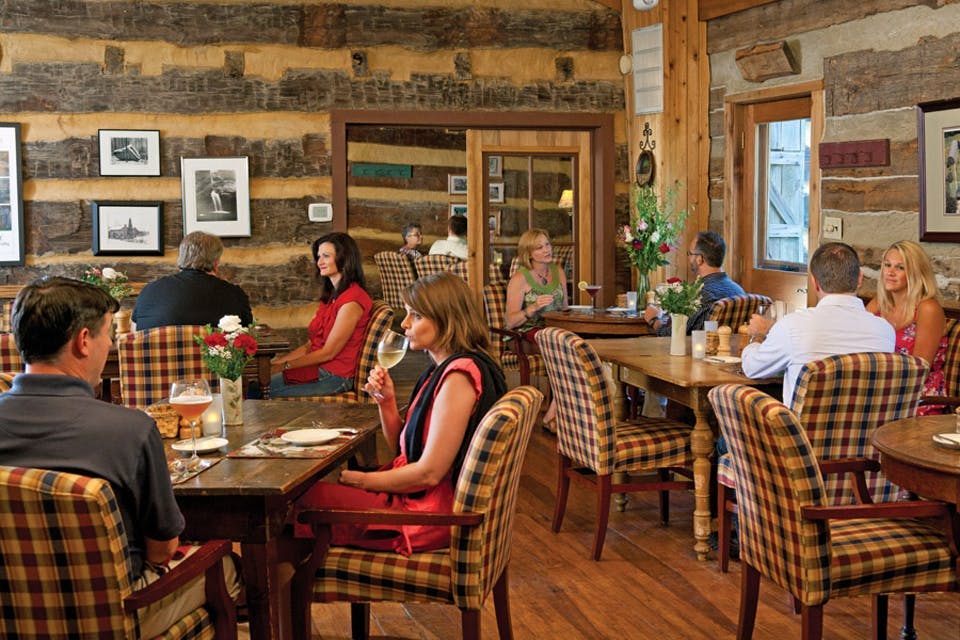
In the 19th century, inns flourished along the National Road, offering gritty livestock drovers as well as U.S. presidents a place to rest, wet their whistles and enjoy a hearty meal. Even the smallest Ohio towns often had multiple taverns, both fancy and plain, where travelers could shake off the road dust and swap stories by a toasty fire.

You’re following in the footsteps of six presidents when you step through the mahogany door of The Red Brick Tavern in Lafayette, built in 1837. Stop there and enjoy its traditional American cuisine — including hand-cut steaks and crispy homemade soups.

For more information, call 740/852-1474 or visit historicredbricktavern.com.

Another stopping point for travelers of today and yesterday is The Pennsylvania House in Springfield. The three-story brick Federal-style inn, built in 1839, was a popular tavern and inn during the height of coach and wagon travel. Today, Pennsylvania House is a must-see museum with an extensive collection of 19th-century artifacts, furniture, paintings, dolls and fabrics.

For more information, call 937/322-7668 or visit pennsylvaniahousemuseum.info.

Englewood MetroPark

The National Road carries travelers from the dramatic Appalachian foothills of eastern Ohio to the rich, open farmland of the west, making every mile a feast for those who love natural history.

In the 1,900-acre Englewood MetroPark in Montgomery County, visitors encounter a remnant of the swamp forest that once covered parts of Ohio. Stretch your legs on a boardwalk that wends its way into wetlands and meet some unusual citizens — black ash trees, swamp white oaks and the rare pumpkin ash.

The natural landscape at Englewood includes scenic Martindale Falls and Patty Falls, as well as the serene 31-acre Aullwood country garden, with its diverse plants, flowers and trees.

For more, visit metroparks.org or call 937/275-PARK.

Ohio Statehouse
History is made every day at the Ohio Statehouse in Columbus, which celebrates its 150th birthday in 2011. Completed in 1861, Ohio’s capitol building is one of the finest examples of Greek Revival architecture in America. The grand yet graceful building is constructed out of Ohio itself — made with limestone quarried from the banks of the nearby Scioto River.

Adorned in red, white and blue bunting, the Statehouse will mark its sesquicentennial year with tours, open houses, old-time baseball games, art exhibits and a Civil War encampment.

On April 29, see an Abraham Lincoln photo exhibit and a replica of his casket, marking the date in 1865 when the slain president lay in repose in the Ohio Statehouse Rotunda.

Events are happening year-round and many are free but require an RSVP. For a schedule, visit ohiostatehouse.org or call 888/OHIO-123.

Camp Chase Confederate Cemetery
If there is one place a history enthusiast should not miss along Ohio’s National Road, it’s Camp Chase Confederate Cemetery in the Hilltop neighborhood west of downtown Columbus. It’s a surprising and moving discovery in a busy residential and commercial district.

Once a Civil War training, staging and prison camp, it’s now a cemetery inside a low stone fence that holds 2,260 Confederate soldiers. Rows of white grave markers surround a monument with a single word carved on its high stone arch: “Americans.”

A historic marker on the National Road gives a brief history of Camp Chase. To find the cemetery, take nearby Hague Avenue south and turn right on Sullivant Avenue. The cemetery will be on the right. Adjacent side streets offer limited parking. 
Copyright © 2013 Ohio Magazine All rights reserved. | webmaster@ohiomagazine.com
1422 Euclid Avenue Ste. 730 Cleveland OH 44115