



June 2008 Issue
Past and Present
Visit Western Pennsylvania and Western New York for a glimpse of history and a taste of modern-day arts and culture.
Gerald Bartell
In the 1700s, Pittsburgh and Western New York marked the edge of the American colonial settlement, its border oceans of forests, not of deep blue water. What sort of frontier was this region of forts and forests, lakes, waterfalls and mountains? And in the hundreds of years since that time, what grew up here as the border rolled westward?
Why not head to this old frontier this summer and find out? You can be there in a few hours, and the timing of a visit is opportune. Pittsburgh celebrates its 250th birthday this year, the perfect occasion to visit the city and surrounding Western Pennsylvania region. Meanwhile, Western New York proffers a full slate of cultural and historic attractions.
Pittsburgh: 250 Years Young
From the Civil War through World War II, Pittsburgh roared as one of the nation’s industrial giants. Steel from the city’s mills went into weapons, cars, then battleships. Factory smoke choked the valleys, prompting one wag to dub the city “Hell with the lid off.” At the same time, a vibrant arts scene and a distinctive culture took root.
Begin a visit to Pittsburgh by getting the whole picture — a clear and sharp picture now that the factory soot and smog are greatly reduced. Ride a restored trolley car as it climbs the steep Duquesne Incline (
http://incline.pghfree.net) to a perch 400 feet above the city. Here, from a new observation deck, you look down on a cityscape defined by three rivers: the Allegheny and the Monongahela rolling together to form the Ohio. This point of confluence has been dubbed simply and directly as The Point.
After ducking into the Upper Station Museum for a look at displays on the incline’s history, head back down to Point Park and visit the restored Fort Pitt Museum (
www.fortpittmuseum.com). On this spot, what is now the 20th largest city in the United States began life as a settlement in 1758. British, French, Native American and American interests vied, sometimes violently, for control of what was obviously a strategically powerful spot. The museum’s dioramas, a restored barracks room and a fur trader’s cabin recall life in the early days of a brawling frontier.
Athletically inclined visitors may want to set off from the fort on a hike or bike excursion that moves through the heart of historic colonial villages along the newly completed Great Allegheny Passage trail, which stretches 335 miles to Mt. Vernon, Virginia.
Less ambitious travelers should try one of the Pittsburgh Heritage Neighborhood Tours, scheduled to run through October (
www.visitpittsburgh.com/calendar). Then fill in a Pittsburgh orientation with details, details, details at the Heinz History Center (
www.pgh history.org). Exhibits recall the lives and works of Pittsburgh’s artists and inventors. A new wing of the museum devoted to sports in Pittsburgh brims with great artifacts — Satchel Page’s baseball glove, Arnold Palmer’s sweater and golf bag, and the car that Chip Ganassi powered to win the Indy 500 in 2000. A five-screen theater shows filmed accounts of great moments in sports.
Pittsburgh’s neighborhoods — 90 of them, by some counts — are a diverse lot that allow a visitor to design vacations around a theme, or, by visiting several of them, a mix-and-match itinerary of dazzling diversity.
Devotees of contemporary art, for example, head to the North Side, home to several museums. The Andy Warhol Museum (
www.warhol.org) archives 8,000 works from the Pittsburgh native’s career, including paintings, drawings, prints and photos. The collection also includes 273 Warhol films. At The Mattress Factory (
www.mattress.org), visitors move through room-sized installations that explore the effects of color, sound and historic period on the senses. A walking tour of North Side streets rounds out a visit with rich examples of traditional Gothic, Revival and Romanesque home designs.
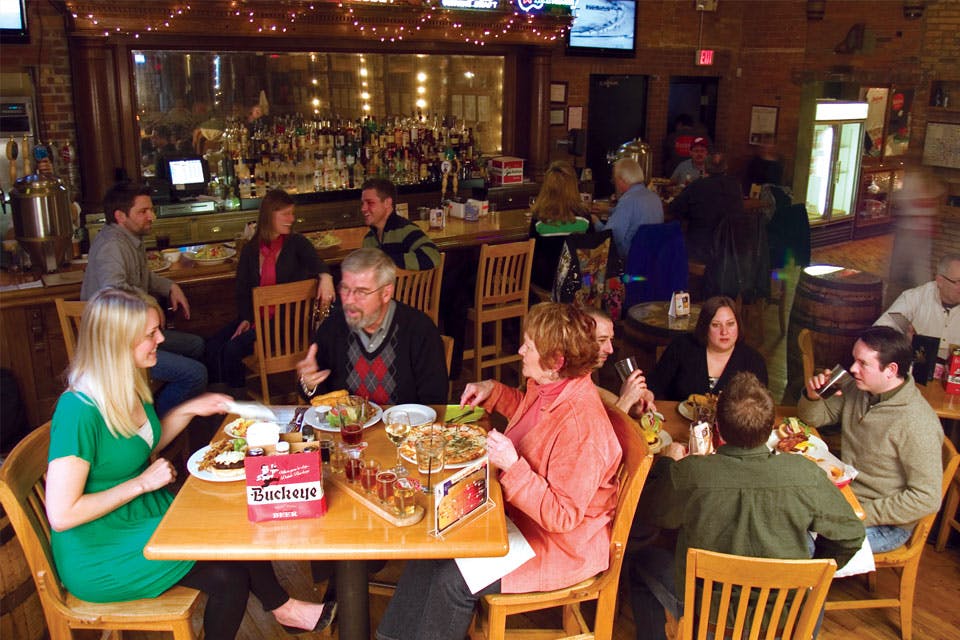
As the North Side feeds the aesthete, the Strip District sates the gourmand. Restaurants pleasing every palate crowd into the District, a collection of old warehouses and factories near the banks of the Allegheny. The fried scallops and the fish sandwich (with cod or whiting) at Whaley’s Fish Market prove you can eat great seafood in a landlocked state. Lidia’s serves up TV chef Lidia Bastianich’s versions of Italian classics such as gnocchi, pappardelle and minestrone. Primanti Brothers assembles artery-clogging sandwiches such as the bratwurst and egg or cheese and Genoa salami, both crammed with fries, tomatoes and cole slaw. There’s also plenty of street food in the Strip. Honor the memory of H. J. Heinz, who began work on his 57 varieties of soups, pickles and condiments at a plant in the Strip District, by smothering a hot dog with ketchup, mustard and relish.
Come evening, theater, music and dance soothe the savage beast in the Cultural District, as lights come up at the city’s vibrant arts centers. A professional company at the Pittsburgh Public Theater stages a diverse bill of fare. For decades, Pittsburgh’s Civic Light Opera has produced outstanding versions of classic Broadway musicals during a summer season at the Benedum Center. This year’s CLO line-up includes “The Color Purple,” “Mame” and “West Side Story.” The Pittsburgh Opera also graces the stage at the Benedum Center, while the Pittsburgh Symphony holds forth at Heinz Hall.
Before and after theater productions and concerts, hungry arts patrons head to the Grille on Seventh, which serves traditional entrees such as steaks, pasta, crab cakes and roasted chicken.
For many, Pittsburgh stands for one thing: sports. The Steelers and the University of Pittsburgh Panthers draw huge crowds, especially since the opening of Heinz Field in 2001. The spectacular gridiron stadium affords equally spectacular views of the cityscape. Arrange a tour of the stadium, which includes the Coca Cola Great Hall, where displays of team memorabilia date to 1933. Check out the now-empty jar of peanut butter that energized Terry Bradshaw. Home for the Pittsburgh Penguins Hockey Team is the Mellon Arena, while the Pittsburgh Pirates, five-time winners of the World Series, play ball at PNC Park.
For more information on Pittsburgh attractions and events, visit
www.visit pittsburgh.com.
Falling for New York
The swirling cultural, artistic and historic currents that shape Pittsburgh sweep into Western New York, as well. From Fort Niagara in the north to Chautauqua Lake in the south, the region pulses with attractions celebrating a vibrant past and present.
Like Fort Pitt, Fort Niagara (
www.old fortniagara.org) orients visitors on the history of the region. Built by the French in 1726, the Fort stands on a bluff overlooking Lake Ontario and at the mouth of the Niagara River as it runs swiftly to its famous falls, just a few miles to the south. The Fort’s strategic location on the Great Lakes meant British, French and American colonial forces warred for control of the spot, with the Americans eventually victorious. Fort Niagara’s military history extended into the 20th century. During World War II, German and Austrian prisoners of war were held on-site. Today, tour guides recall the fort’s long history. During summer months, there are re-enactments and, for younger visitors, a chance to bear a musket and learn military drill. Fort Niagara lies adjacent to Fort Niagara State Park, where visitors can swim, hike, sail and play soccer and tennis.
Lovers of arts, crafts and literature will savor a visit to East Aurora, New York, just 30 minutes south of Buffalo. Here in this idyllic village in 1895, Edward Hubbard founded a community to support craftspeople. Named Roycroft after two 17th-century bookbinders, the community drew bookbinders, metalworkers and furniture makers. Today the Roycroft Campus continues its work, with a summer festival showing off its creations on the weekend of June 27.
In 1905, Hubbard opened the Roycroft Inn (
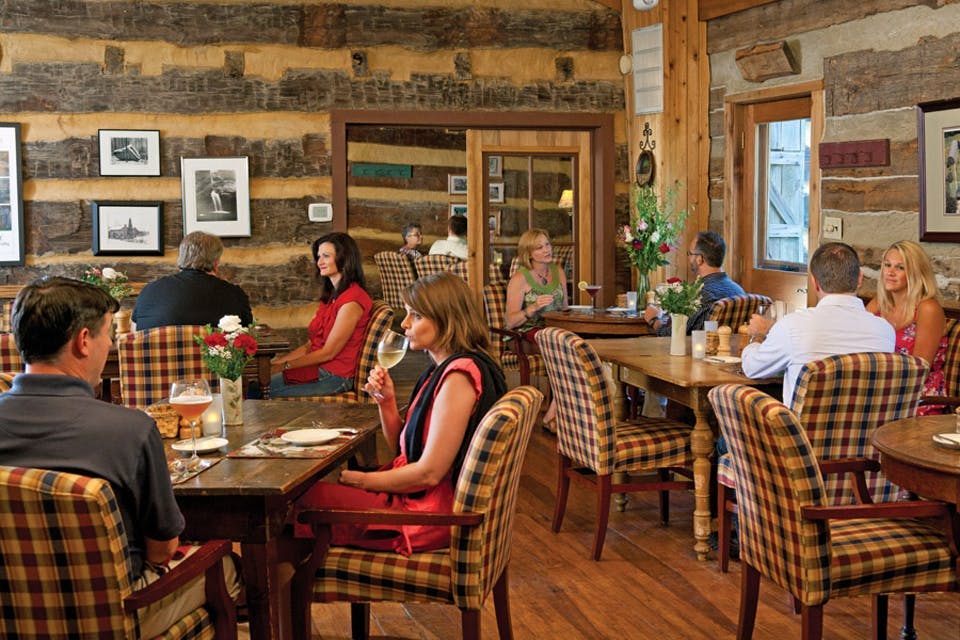
www.roycroftinn.com), also in East Aurora, to accommodate the artisans who came to the community to work. Over the years, these guests included Ralph Waldo Emerson, Charlotte Bronte and Henry David Thoreau. The Inn has been impeccably restored, its signature, handmade furnishings given new sheen. Visitors enjoy guest-room suites and a restaurant that extends outdoors during the summer. Jazz musicians jam by the fireside on Fridays and a classical string quartet plays for Sunday brunch. There are wide porches for chess and reading and, nearby, a golf course and hiking trails through the Beaver Meadow Audubon Center.
Besides the inn and Roycroft Campus, East Aurora is home to many antiques stores and art galleries. Family visitors will delight in the Toy Town Museum (
www.toytownusa.com). Some 100 toy companies have located in Western New York over the past 100 years, and East Aurora is still home to Fisher-Price. The Toy Museum archives Fisher-Price toys dating to 1931. Also on display are a classic 12-room antique dollhouse and an erector-set exhibit.
A special program this summer highlights toys inspired by “The Wizard of Oz,” “Star Wars,” “How the Grinch Stole Christmas” and “The Muppet Show.”
If a visit to East Aurora stimulates interest in art, schedule a visit to the Albright-Knox Art Gallery in Buffalo (
www.albrightknox.org). The museum houses modern and contemporary art, including works by Picasso, Gauguin, Pollock and de Kooning. Lunches are served in the museum’s café, which features a soothing minimalist décor.
Buffalo is also the site of two Frank Lloyd Wright homes. The Darwin Martin House Complex in Parkside (
http://darwinmartinhouse.org) is a splendid example of Wright’s Prairie-style architecture. A full-scale restoration of the property is under way, and current tours highlight “behind-the-scenes” details of the project. Just outside Buffalo on Lake Shore Drive, Wright’s Graycliff (
www.graycliff.org) perches on a 70-foot cliff overlooking Lake Erie. A variety of tours traverse the property.
Western New York’s natural splendors are on display at Allegany State Park on the southwest border of the state. Occupying 65,000 acres at the southern edge of the state, the park is a place of primitive forested valleys, lakes, waterfalls and dramatic rock outcroppings. Vacationers staying in outdoor campsites, cabins and quaintly furnished cottages fill days and nights with myriad activities. Eighteen hiking trails of varying levels of difficulty wind through the mountains, where horseback and mountain bike trails also await. Boat launch sites are available lakeside. The park is adjacent to the Allegany Indian Reservation, where the Seneca-Iroquois National Museum makes a worthy daytrip. The museum’s interactive displays chronicle the evolution of Iroquois culture, with emphasis on the Senecas, a major presence in the region.
Nowhere is this confluence of art, history and culture in this region more evident than at the Chautauqua Institution (
www.ciweb.org). Since 1874, it has offered summer programs devoted to the arts, education, religion and recreation. The setting on the shores of Chautauqua Lake at the southwestern edge of the Western New York. Each week visitors arrive for a series of lectures and discussions that center on a variety of themes. This year’s topics span sports in American culture, food, politics, and the state of the American election system. Ballets, operas and concerts by popular and classical musicians enrich evenings. Included in this year’s pop line-up are Bill Cosby, Vince Gill, Kenny Loggins, Bruce Hornsby and Jim Brickman. Golf, tennis, sailing and swimming get the blood flowing after morning lectures. Lodging at Chautauqua’s Athenaeum Hotel caps the Chautauqua experience. Built in 1881, this Victorian gem houses cozy rooms and serves meals on a veranda overlooking the lake.
In 1925, George Gershwin composed his “Concerto in F” at a practice shack in Chautauqua. Seated on an Adirondack chair and overlooking Chautauqua Lake, you might compose a symphony, write a story or just listen to Gershwin on your iPod. Or maybe you’d rather just sit here, look over the lake and imagine what it was like 250 years ago when this vibrant territory stood at the edge of America.
Be the first to leave a comment.