



Printer Friendly VersionEmail A FriendAdd ThisIncrease Text SizeDecrease Text Size
April 2010 Issue

Spring's Simple Magic

The majestic gardens of Kingwood Center in Mansfield bring spring to our senses.

The Kingwood manor house is listed on the National Register of Historic Places.

David Fitzsimmons

trav1_romantic_article1_th

Canna "Bengal Tiger"

David Fitzsimmons

trav1_romantic_article1_lrg trav1_romantic_article1_th

The Orangery at the entrance to the greenhouse

David Fitzsimmons

trav1_romantic_article1_lrg trav1_romantic_article1_th

"Lady of Gaillardia" sculpture is surrounded by Celosia "Floridale Scarlet."

David Fitzsimmons

trav1_romantic_article1_lrg trav1_romantic_article1_th

The greenhouse

David Fitzsimmons

trav1_romantic_article1_lrg trav1_romantic_article1_th

Bird of Paradise

David Fitzsimmons

trav1_romantic_article1_lrg trav1_romantic_article1_th

A dahlia

Thinkstock

trav1_romantic_article1_lrg trav1_romantic_article1_th

Black Swan

Thinkstock

trav1_romantic_article1_lrg trav1_romantic_article1_th

Peacocks can be spotted on the grounds.

Thinkstock

trav1_romantic_article1_lrg trav1_romantic_article1_th

The Formal Garden

Courtesy of Kingwood Center/Chuck Gleaves

trav1_romantic_article1_lrg trav1_romantic_article1_th

Lucifer the Rabbit

Courtesy of Kingwood Center/Chuck Gleaves

trav1_romantic_article1_lrg trav1_romantic_article1_th

The Formal Garden

Courtesy of Kingwood Center/Chuck Gleaves

trav1_romantic_article1_lrg trav1_romantic_article1_th
Lucifer the rabbit was missing.

The stone sculpture that watched over a small corner of the 47-acre Kingwood Center for many years had suddenly disappeared. Loyal visitors to the Mansfield estate and gardens demanded to know the rabbit’s whereabouts.

“Kingwood has many traditions, some of which we know about and some which we don’t,” explains Kingwood Center Director Chuck Gleaves. “There are families who come back every year to measure their kids against the rabbit sculpture to see how much they have grown.”

Not to worry. Lucifer just moved to a different spot and re-appeared like a rabbit out of a hat. He now resides in Kingwood’s new sunny, inviting and expanded Herb Garden, completed last year. And even better, an identical stone rabbit keeps him company in his new home.

Kingwood’s entire grounds enchant in spring. On the earliest of spring days, acres of yellow, white and blue crocus magically appear from the warming earth. Hundreds of varieties of optimistic daffodils, which Kingwood gardeners have been planting for more than 50 years, claim the flower beds from mid-April to early May. Redbuds also strut their stuff.

Yellow-blossomed magnolia trees, including Yellow Bird, Butterflies and Elizabeth, as well as magnolias with pink/red blossoms — Ricki, Randy and Pinkie — also put on a show. Dainty pink and white crabapple blossoms burst in mass. And tulips own spring.

“We treat our tulips like annuals and had 50,000. Now we have about 30,000, but no one will be disappointed because of the way they are planted,” says Gleaves, listing varieties Menton, Renown, West Point, Ballerina and Maureen, which help create the mathematical illusion.

When the tulips droop, they leave the stage, to be replaced by thousands of annuals that add color and pop to the gardens. Among the best: Talinum “Kingwood Gold,” a low-growing bedding annual with yellow leaves first cultivated on the premises. Hundreds of perennials (the tenderest overwinter in Kingwood’s greenhouses) make good on their promise to return in the spring.

Kingwood, built in 1926, was the home of Charles Kelley King, an electrical engineer who became president and chairman of the Ohio Brass Company. The site’s initial landscape design was created by the renowned Cleveland landscape architectural firm Pitkin and Mott. Over the years, separate terraces, allees, fountains, trellises, theme gardens and outdoor rooms have become connected by both a horticultural philosophy and an attractive basket-weave redbrick walkway.

Following the walkway, visitors are led to the Formal Garden, Kingwood’s historical garden. With original bluestone paving, classic stone walls, a sunken garden, a small reflecting pond with hardy water lilies and a sculpture of Pan, the garden echoes the days when society members strolled the grounds. The Formal Garden was built around King’s elegant swimming pool. Pennyroyal, a perennial groundcover in the mint family, was planted around the pool to release a sweet scent when stepped on with bare feet.

Back on the brick path, visitors in summer will encounter Kingwood’s famous daylily collection and pretty peony garden. The Charles E. Nail Memorial Rose Garden displays more than 500 shrub, floribunda, hybrid tea and David Austin roses. The white-flowered Floribunda Rosa September Mourn, dedicated to the Salvation Army and others who responded quickly on September 11, 2001, in New York City, is a favorite among visitors.

Kingwood’s greenhouse displays tropical plants and succulents (think hot dog cactus and an elephant foot tree) and is a welcome refuge on a windy, rainy spring day. The multi-level Terrace Garden, built in 1994, provides quiet places to read, rest or sketch a Siberian iris.

“I’d like people to think they can come here and relax,” says Gleaves, adding that 15 acres of the estate are undeveloped woodlands. “We are like an oasis in a busy world. Adults enjoy the plants and the kids enjoy the birds.”

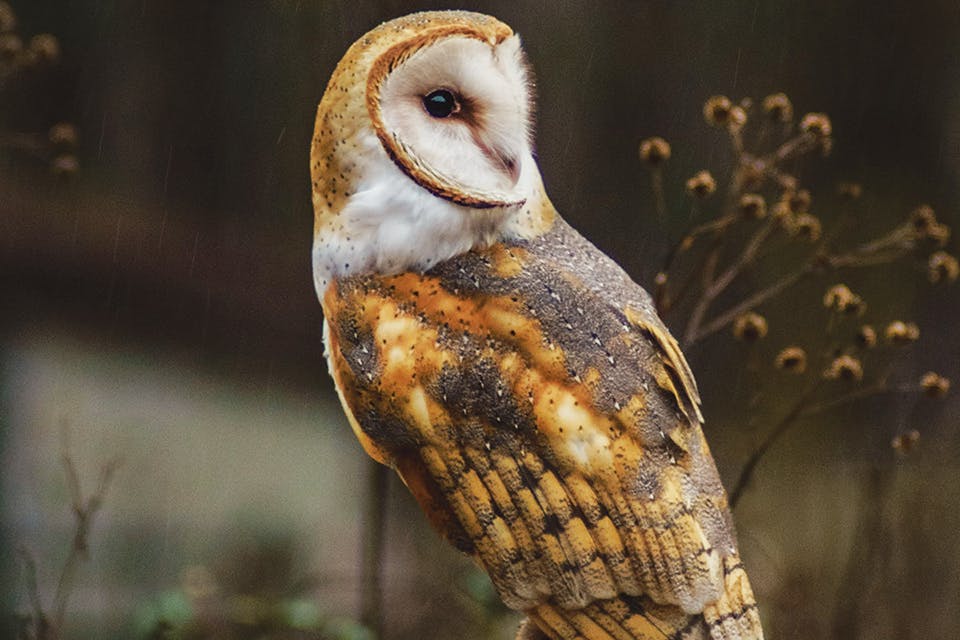
Ah, yes, the birds. Not just transient robins and busybody sparrows, but three resident peacocks with iridescent feathers and a trio of self-assured peahens who wander freely throughout the property. Kingwood’s popular pond is also home to a squadron of ducks, including amusing Indian Runner ducks that sprint with their wings close to their bodies when on land.

“King kept birds, including turkeys and chickens,” says Gleaves, pointing out a large brick chicken coop that now serves as part of the estate’s behind-the-scenes service area. “He had a dovecote, too, but we can’t say for sure he had doves. It was one of those things wealthy people back then thought they should have.”

King was divorced twice, never had children and left his property to a private foundation. Kingwood became a public garden in 1953, one year after King’s death. The first and second floors of King’s three-story brick and stone mansion are open to the public and contain many of the original furnishings. Kingwood was placed on the National Register of Historic Places in 1976.

Gleaves hopes to increase the number of trees on the property by planting more white and English oak trees, as well as elm and tulip. That is a change the director definitely wants to make. Other changes — in hours, admission prices, programs and staffing — may be more challenging — a result of the country’s economic climate.

“But spring will come and it is always our busiest time of year. People like to come out and look for the early little plants that come up first,” Gleaves says. “That is something visitors will always want to do.”

When You Go...
Kingwood Center
900 Park Ave., Mansfield 44906
419/522-0211. kingwoodcenter.org
Call or visit the Web site for hours and admission prices.

Flower Power
Grow a greener garden with these tips from the Kingwood Center staff.
  1. Grind up the leaves you composted last fall. In early May, spread the leaves on flower beds prior to planting annuals. Plant the annuals “through” the leaves into the soil. That eliminates the need to mulch around each annual after it is planted.

  2. Work the soil until it has the consistency of chocolate pudding.

  3. Regularly deadhead annuals to maintain blooms all summer long.

  4. After plants flower, store tender bulbs and rhizomes (such as cannas, dahlias and gladiolas) in a cool area such as a basement for future use in seasonal beds.

  5. Collect seeds from your crop of annuals and next year sow them directly into the soil.

 
Copyright © 2013 Ohio Magazine All rights reserved. | webmaster@ohiomagazine.com
1422 Euclid Avenue Ste. 730 Cleveland OH 44115