





Printer Friendly VersionEmail A FriendAdd ThisIncrease Text SizeDecrease Text Size
April 2008 Issue

Sublime Scenery

Surround yourself with beauty and tranquility at Schedel Arboretum and Gardens, and gather ideas to use in your home’s landscape.
Sublime Scenery
Two white mute swans glide gracefully across the lake and preen in anticipation of visitors. Spring rains gently bathe arched footbridges. Thousands of annuals, including marigolds, impatiens and purple wave petunias wait patiently in the greenhouse, almost mature enough to be transplanted outside.

Add to that scene the debut of lavender-colored lilac buds, the creamy white blossoms of kousa (Japanese) dogwood trees and the pink “pin cushion” flowers of the mimosa silk tree (Albizia julibrissin). It’s as if Mother Nature goes wild with a brand new box of pastel chalk.

The 17-acre Schedel Arboretum and Gardens in Elmore is in dress rehearsal this month for its opening day, May 1. This year, about 15,000 visitors are expected to tour the tranquil gardens, 20 miles southeast of Toledo. Many return year after year to see how much the tall ponderosa pine (Pinus ponderosa) has grown or to walk familiar meandering paths through emerald lawns and past beds of blue bearded irises and frilly ferns.

“Some repeat visitors have specific areas they like best,” says David C. Halsey, assistant director of the Schedel Arboretum and Gardens. “Some will go right to a bench under a big old maple tree. Others will head to the Japanese Garden and sit for an hour.”

The property’s 734 trees and shrubs and 43 flower beds are tended by more than 100 volunteers and 20 staff members. The planting of colorful annuals — between 10,000 and 15,000 plants in all — takes the entire month of May.

“I think what really grabs visitors is the element of surprise. You drive by here and from the road you see some nice annual flower beds. But when you walk back farther onto the property, you see there is an actual 30-feet difference between the highland and lowlands areas of the site. It’s a big expansive view all the way to the Portage River,” says Halsey, who has worked at the arboretum for 18 years. “You look down, see the two lakes and a waterfall that is directly beneath you. You may see a bald cypress tree with “knees” coming up out of the ground. It makes you want to explore further.”

(The dual elevations provide the property with an advantage. The lowlands are “sheltered” by the higher ground, allowing a number of species that normally could not thrive in northwestern Ohio to exist.)

Visitors will begin their botanical adventures at the new Brown Welcome Center, scheduled to open this summer. The 4,800-square-foot building on a bluff overlooks the lakes and will house a visitor receiving area, library, gallery, gift shop and meeting room. Visitors can view the lowland area of the gardens from the brick building’s multi-level balconies or take stairs down to water’s edge.

“The visitor center has been one of my dreams,” says Reginald D. Noble, a plant physiologist and director of the Schedel Arboretum and Gardens since 1998. “The center is named for Elizabeth and Charles Brown. He was a founding member of the Schedel Foundation Board of Directors, which operates the property. A major donation in the couple’s honor was given by Brown’s sister-in-law, Kathryn (‘Kim’) Jordan.”

The land has always been the subject of lofty dreams. The garden’s founders, Joseph and Marie Schedel, lived on the property for more than 50 years. Schedel, a German immigrant, owned a company that made dolomite used in smelting steel. His business success allowed him to pursue several passions, including the breeding of aquatic waterfowl.

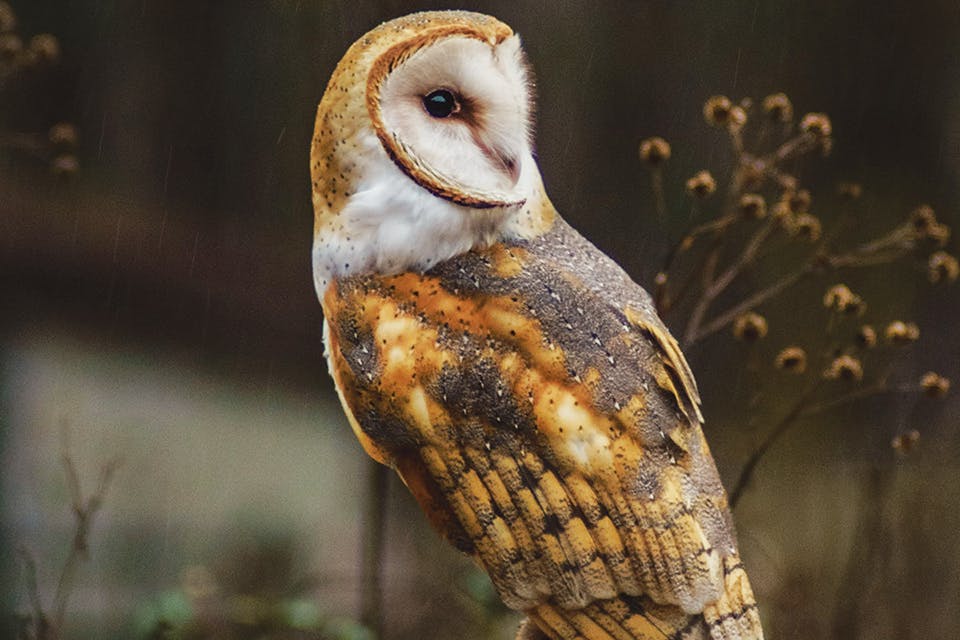
“There were all kinds of valuable birds, ducks and geese, swimming around the lakes. An ingenious canal provided fresh water, which prevented the lakes from freezing so the waterfowl could use them,” Noble says. “Unfortunately, there were also great horned owls in the area that thought this was a great feeding place. Schedel asked his foreman to trap the owls. But when the state wildlife officials told him that was illegal, Schedel ended his dream for the waterfowl center.”

The couple founded the nonprofit Joseph J. and Marie P. Schedel Foundation in 1963 and concentrated on creating a botanical specimen garden that would be enjoyed by future generations. The property opened to the public in 1991.

The waterfowl building became the recently expanded greenhouse, and today wild white egrets, blue heron, cedar waxwings, orchard orioles and nearby nesting bald eagles frequent the property’s lakes and gardens. Noble is also working with a Black Swamp Bird Observatory volunteer to catalog bird species that live within and visit the property.

The Schedels were also world travelers with a particular love for Asia. The stunning Japanese Garden, a place of serenity and beauty, reflects the couple’s admiration for the East. The sound of soothing water comes from two waterfalls that empty into pools and eventually flow into the lakes. Most noticeable in the garden is the red torii, a traditional Japanese gate constructed of two upright supports and crossbars. Passing underneath a torii on the way to a shrine is an act of purification in some cultures. For others it suggests a healthy life or prosperity. The garden also includes stone lanterns and a stupa, a pagoda-like memorial where the ashes of the Schedels, who died in the 1980s, are entombed.

The terraced hill that provides the backdrop for the

Japanese Garden was reconfigured several years ago. The $10,000 improvement involved moving 50,000 pounds of soil, juggling 900-pound boulders into place, replanting and supporting the limestone walls.

The property’s approximately 100-piece bonsai collection “is very valuable,” according to Noble, and is another acknowledgement of the Schedels’ interest in all Asian art forms. Recently, the curator of the collection, Leo Pelka of

Catawba Island, donated bonsai specimens from his own private collection.

“We don’t have 200-year-old bonsai like the National Arboretum in Washington, D.C., has. But a number of ours are 60 to 70 years old and getting there,” Noble says, who lives with his wife, Sherry, in the brick century manor house on site.

Many arboretums have show stoppers — specimens that botanists and backyard gardeners specifically come to see — and Schedel Arboretum and Gardens is no exception. The five bristlecone pine (Pinus aristata) trees represent “the oldest living inhabitant on earth,” according to the Schedel Arboretum and Gardens Tree Guide that is available for sale on site. The tree can reach almost 5,000 years of age, but generally grows only about one inch per century. One of the original three Schedel pines is still growing and Noble arranged for the planting of four more.

Thought to be extinct until the 1940s, the dawn redwood (Metasequoia glyptostroboides) is a conifer that loses its needles, one of only four species to do so, according to Noble. Joseph Schedel received a few specimens that were grown from seeds collected on a dangerous expedition to China by

Arnold Arboretum of Harvard University. The Schedel grove of dawn redwoods is one of the oldest collections in the world outside China.

“I look at some of the old trees on the property and I am just amazed. They have been here so long. When I prepare to prune them, I think they should be approached with respect instead of just hacking away at them,” Halsey says.

The arboretum also features 25 varieties of Japanese maples, 50 lilac varieties, a golden chain tree, tricolor beech and an umbrella magnolia. Fun plants to look for include bamboo, the Alaskan weeping cedar (Chamaecyparis nootkatensis) and the Ohio buckeye (Aesculus glabra), named the state tree in 1953. Know too, that when looking at the black walnut tree (Juglans nigra), its “soft chocolate” colored timber is some of the most highly prized and expensive wood in the world.

Individual theme gardens on the property ensure sure there is something for all kinds of plant lovers. The small but elegant hybrid tea rose garden with a reflecting pool is bordered by boxwood hedges and located near the manor house. The deep pink Colorado water lilies are favorite subjects for the many amateur and professional nature photographers who come to Schedel Arboretum and Gardens for inspiration. If you’re lucky, sometimes one of the resident frogs will pose for a photograph on one of the hardy or tropical lily pads.

Carrots, beets, basil and other vegetables and herbs are grown in the popular Kitchen Garden, but the hot pepper collection is the main attraction.

“In 2007, there were more than 100 varieties of hot peppers, most chosen for their ornamental attributes and a few chosen because they were rated as the hottest peppers in the world,” Halsey says, whose wife, Susan K. Halsey, is the head gardener. “We grew a new pepper named Bhut Jolokia with a heat rating of 1,001,304 Scoville heat units. The next closest was savina habanero at about half the heat.”

During warm weather, “exotic” plants that include elephant ears, bananas, gingers, hibiscus, mandevilla vines and others vacation in the outdoor Tropical Garden. At the end of the season, they snuggle in the greenhouse.

“There was a time when we were leaning to all unique and exotic plants,” Halsey says. “But we realized that some of the old standbys like geraniums, petunias and begonias now come in new colors and varieties so we can start using them on the property again. They are more reliable here than some of the more unusual plants and last longer into the season.”

Veronica Sheets, Schedel’s event coordinator, says that in addition to the popular organized garden tours, visitors are also welcome to make reservations for the sculpture tours. Ten outdoor works of art make up the gardens’ permanent sculpture collection. Represented artists include: Joe Anne Cousino, Joseph Sheppard, Emanuel Enriquez, Robert Garcia, Tuck Langland, Shawn Morin and Calvin Babich. The sculptures range from “Good Morning,” Garcia’s whimsical rooster who watches over the vegetable garden to Sheppard’s tender interpretation of “St. Francis.”Special, temporary sculpture exhibits are changed every year.

The Trellis Gallery (once the Nobles’ garage, which they graciously “sacrificed”) is the site of a number of fine art and photography shows each year. Weddings, wedding photography and rehearsal dinners can also be held on site, but leave the weekend picnic basket at home at all times.

“Some people get upset when we tell them they can’t spread a blanket out and have a picnic on the grounds. This isn’t a park,” Noble says. “We try not to put a lot of signs up to disturb the tranquility, but we want people to understand. You want to know what it is about this place that makes so many people fall in love with it and you try to preserve that. Maybe it’s because it isn’t overwhelming, but just a little paradise.” 
 
GARDENSPRING Beginning about the third week of May, expect blooming lilacs and other spring flowering trees and shrubs, peonies, Mimosa Silk trees and irises.

SUMMER Thousands of colorful annuals take summer’s center stage, with many lasting through September. Some perennials, including Baptisia (Blue False Indigo) look best in early summer, but others, including Echinacea (Coneflower) are standouts in late summer and early fall.

AUTUMN In autumn, hundreds of orange, yellow, white and rust-colored mums brighten the property’s entrance, driveway and manor house. The Kitchen Garden is also ready to harvest.


Manor house tours are by reservation only. Some of the treasures that the Schedels acquired on their travels in more than 100 countries are featured and include antique carved jade, archaic bronze and antique Persian rugs. The Schedels preferred to live most of their years in the cozy cottage on the property, calling the larger manor house “the museum.”
 
Copyright © 2013 Ohio Magazine All rights reserved. | webmaster@ohiomagazine.com
1422 Euclid Avenue Ste. 730 Cleveland OH 44115