





September 2007 Issue
The View from the Road
A relaxing drive in Amish Country reveals scenic vistas and charming vignettes of a simpler time and place.
Sue Gorisek
When I was a kid, my father insisted on a weekly ritual he referred to as "our Sunday drive in the country." He'd drive all day, cruising dusty roads, exclaiming over the health of the cows and the height of the corn, which he insisted had grown appreciably since last week's cornfield inspection.
It was always the same. Dad drove. We sat. We seldom stopped to eat and we never stayed overnight.
That's why I have developed my own ironclad rules about country drives. My itineraries must have splendid scenery, of course, but they must also include a great place for food and a good night's sleep.
So, with those essentials in mind, here are two Amish Country road trips that even a sulky child would enjoy, as both trips end with dinner and a very special place to spend the night.
Holmes County: Follow the buggies, but watch out for chickens crossing the road
This is a wide-ranging circle tour, beginning on St. Rte 39 in downtown Millersburg and ending at The Inn at Honey Run, which is less than 10 miles north of Millersburg, but hours away if you follow my roundabout route.
First, drive a few blocks east of the Holmes County Courthouse, and turn right onto Port Washington Road.
You'll like this route immediately: The road drops, as steep as a roller coaster, and the distant hills beckon from across a long, deep valley. You've traveled less than a mile from town and yet you're in a whole new world of fields and forests and beautiful farms.
This is my favorite "shortcut" from Millersburg to Charm — never mind that it's twice as long. It's far more intriguing, for this is the wild side of Amish country, with hills that are steeper and valleys that run deeper, too rough to plow. Here, lumber mills outnumber dairy barns. So, while the farms seem neat and tidy — in the manner of most Amish enterprises — they are far less manicured than those farms farther north where the gentle hillsides have been tamed by the plow.
Stay on Port Washington Road until you come to a stop sign (at the Inn Maid Noodle factory), then turn left onto Co. Rd. 68, where the scenery just gets better and better. Every bend in the road brings a new and delightful surprise: dense woodlands one minute, panoramic views the next; a sudden glimpse of Amish kids bouncing on a front-yard trampoline; the glitter of solar panels atop an Amish house; a flock of chickens crossing the road.
Drive slowly on these back roads. Livestock lurks in unexpected places; I once had a close encounter with a pig. And there's a steady stream of people, too — on bikes, or in buggies, or just walking down the road.
Many farms have a small business attached, catering more to Amish needs than to tourists' taste. There's even an Amish Maytag repairman who specializes in fixing washers that run on gas.
Co. Rd. 68 twists and turns so much it's impossible to maintain a sense of direction. When the road dead-ends (at the Beck's Mills General Store), you've got to choose: Turn left? Turn right?
Luckily, there's a big map posted inside the store, and the Amish girls behind the counter are also helpful, because so many of their "English" customers appear to be lost.
If you turn left, onto Co. Rd 19, it'll take you east-northeast toward Charm (located on St. Rte. 557). Charm is my favorite "tourist" town, because it's loaded with shops and blessed with good restaurants, but it's still quite real — as evidenced by the heady aroma of the Holsteins plodding along the riverbank.
From Charm, follow St Rte. 557 north and turn right onto Co. Rd. 120 for a shortcut to U.S. Rte. 62 in Berlin.
Rte. 62 north offers remarkable scenery (and traffic jams, especially on Saturdays) and it provides easy access to the pretty towns of Mount Hope and Winesburg, as well as two attractions that merit a visit. First, stop at Behalt, an excellent museum where you can learn about Amish/Mennonite culture (on Co. Rd. 77, just north of Berlin) and also consider a visit to Rolling Ridge Ranch, a drive-through zoo with a nice variety of animals (Co. Rd. 168, just east of the museum). It's a nice break for kids, who can run around and let off steam.
To get away from the tourist crowds, all you have to do is jog northwest to Mt. Eaton (on U.S. Rte. 250). This will bring you back to the less-traveled roads for the northern segment of this Amish Country circle tour.
In Mt. Eaton, turn left (west) onto Harrison Road (Wayne Co. Rd. 2). Locals love this route because it parallels St. Rte. 39, but it's blissfully free of stoplights, tour buses and bumper-to-bumper traffic.
It's wonderfully scenic, too. And completely different from the countryside you've seen so far. Rather than winding in torturous curves and stomach-turning dips, Harrison Road is straight and level, following a natural ridgeline, so that you have panoramic views in every direction.
The vistas are stunning — like the colorful geometry of an Amish quilt patched together for your pleasure. Cornfields shimmer a velvety green in the crisp fall air. Alfalfa fields look like milky-blue squares, set off by yellow-gold borders of newly cut hay. On some farms, the barns are bright red, in defiance of Amish custom.
In the late afternoon, you'll notice the cows beginning to stroll from their pastures down toward the barns to be milked — a daily pattern you'll see repeated at farm after farm.
Maybe that's what's so comforting about these country drives: the reassuring sense that some things never change. But then again, some sights are surprising. On a recent drive along Harrison Road, I saw a bunch of Amish kids racing down the road in a brightly painted green and gold pony cart. It looked brand new and incredibly shiny, as gaudy as something you'd see in a circus, and nothing at all like the sober black buggies that you normally see on Harrison Road.
Continue west to St. Rte. 83. If you want to pick up loads of apples and pumpkins at a lovely hillside orchard, turn right on Rte. 83 and left onto Moreland Road (follow the signs to Melrose Fruit Farm).
However, if what you really want is a great meal and a good night's sleep, stay on Rte. 83 and head south, back to downtown Millersburg. At the courthouse, turn left (north) on St. Rte. 241, then right onto Twp. Rd. 203 and follow the signs to the Inn at Honey Run.
This is Holmes County's most secluded back-road retreat, a quirky collection of architectural styles, including a sleek modern structure (the main inn) that has beautifully mellowed over the years as the forests have grown up around it, two cottages and the earth-sheltered Honeycomb rooms located on an hillside above the inn. There are hiking trails, too, where bird watchers are amply rewarded.
Drivers, who've been hunkered over the steering wheel for hours, will finally get a chance to stretch their legs and work out the kinks.
Suggested Stops
• The shops and authentic atmosphere of Charm
• Behalt and Rolling Ridge Ranch Animal Park near Berlin
• Melrose Fruit Farm in Mt. Eaton
• The Inn at Honey Run in Millersburg
Geauga and Environs: Discover back-road Amish settlements and some unexpected history
In the 1800s, northeast Ohio was a hotbed of religious fervor. Amish families were streaming into Geauga County from Pennsylvania, and Joseph Smith, the Mormon prophet, was drawing converts by the hundreds to the little town of Kirtland, just a few miles away.
Both sects survive to this day, and you can see Amish and Mormon points of interest on this roundabout road trip that begins and ends at Chardon.
Begin at the Geauga County Courthouse, the giddy wedding-cake structure on the north end of the Chardon town square. On the east side of the town square, look for Chardon-Windsor Road and travel about two and a half miles, then turn right (south) on Claridon-Troy Road, heading for Burton, where the Geauga Historical Society has recreated an entire village — 19th-century shops, houses and schoolhouse — to charm and educate visitors.
If you look to the south, the view is purely rural, for Amish farmers are still tilling the soil the same way they've been doing it for 150 years, allowing this area to escape the creeping suburbia that's swallowing up so much of the countryside in northeast Ohio.
Some roads — in the triangle between Burton, Middlefield and Parkman — are so completely Amish that there are no light poles at all. This is Ohio's second-largest Amish settlement (after Holmes County) and it's far less commercial.
Here are three easy ways to see the old Amish communities. From Burton, follow St. Rte. 168 (Burton-Parkman Road) south. Once you cross Shedd Road, you're deep in Amish Country. At that intersection, bear right on Mumford Road. Drive south to Nash Road (west) then turn north again on Jug Street, which will take you back to Patch Road. Follow Patch Road back to Shedd Road, to make the full circle.
For another Amish loop, continue east on Shedd, then turn right on Newcomb Road. Drive south to Nash Road, turn left on Nash and then left again on Bundysburg Road, which will take you back to Shedd.
For a longer loop, stay on Bundysburg Road all the way north to Burton-Windsor Road. Turn left. Follow Burton-Windsor Road west to St. Rte. 608. Take Rte. 608 south to Nauvoo Road. Take Nauvoo left (east) to Hayes Road, and Hayes Road south to Middlefield's main thoroughfare, St. Rte 87.
Go east on Rte. 87 to visit Ridgeview Farm to load up on local produce and sweet apple cider. Kids will like the petting barn, corn maze and hay wagon rides on October weekends, and they might even learn something at the little Amish culture museum that's housed in the barn.
To see the charming town of Mesopotamia, know locally as Mespo, follow St. Rte. 87 east to St. Rte. 534. You'll scarcely believe your eyes, for this is truly the town that time forgot.
It's all old — except for one modern house that somehow sneaked into the mix — and it's strictly Yankee in style. The town was built by settlers from Connecticut who poured in to the Western Reserve in the early- to mid-1800s.
There are two very old frame churches and a sweet mix of homes, from Greek Revival (1830s) to stick-style Gothic (1870s). The extra-long village green is graced with a picturesque two-story emporium, The End of the Commons General Store, which is Mespo's leading tourist attraction, both for its architecture and its wares — Amish crafts, straw hats, cookbooks, bulk foods (for those with a sweet tooth, there's an amazing array of candy), oddities and necessities.
Stroll through the Fairview Cemetery (1818). It's on the east side of the commons, behind the churches. You'll smile at the whimsical animals that local sculptor Howard Brigden carved as tombstones. There's a mournful-looking Labrador retriever with a curly coat and soulful eyes. You can tell by his body language that this dog is mourning the loss of his master.
If you like dirt roads, steep hills, deep forests and isolated Amish farms, take this loop around Mespo. First head north out of town on St. Rte. 534. Turn left on Sweet Road, left again on Girdle Road, all the way south to Clark Road where you turn left again for the final lap, left (north) on St. Rte. 534 to St. Rte 87 left (west) back to Middlefield.
On Rte. 87, you'll see a smattering of signs advertising Amish attractions. It's nothing like the forest of billboards that clutter the highway near Berlin. But it's enough to let you know that the Amish have become a promotable commodity here.
While Ohio's Amish history and culture have received much media attention, the history of northeast Ohio's Mormon settlement is less well known. There's a bittersweet parallel between the Amish and the Mormon experiences. Both groups suffered terrible persecution in their early years. The Amish were driven out of Europe and sought refuge in America. The Mormons were persecuted, too. But their persecution happened right here in Ohio.
Joseph Smith came to Kirtland and the Mormons built their first temple here in 1836. But local people resented the newcomers. Rumors ran wild. And as the hatred grew, mob rule prevailed. Mormon leaders were literally tarred and feathered and run out of town.
Eventually, they made it to Salt Lake City, where the church is headquartered now. For more than a century, Kirtland was just a bad memory. But recently, the Mormons decided to return to Kirtland to recreate a portion of that early settlement — complete with grist mill, lumber mill and ashery — the only one of its kind in the country.
The museum complex is known as The Historic Kirtland Visitors Center. The center is open to the public, and most of the visitors are members of the Church of Jesus Christ of Latter Day Saints. The guides are young Mormons, assigned here as part of their mandatory two-year service to the church.
"We certainly welcome non-Mormon visitors," one of the cheery guides told me, "and we're definitely not preachy!"
To get to Kirtland from Middlefield, take St. Rte. 528 north to St. Rte. 6 (Kirtland-Chardon Road). Turn left (west) and follow the signs. It's about a 40-minute drive, but it's a scenic route and it's definitely worth the effort, for the restoration is beautifully done and the film, describing the Mormons' time in Kirtland, is especially good.
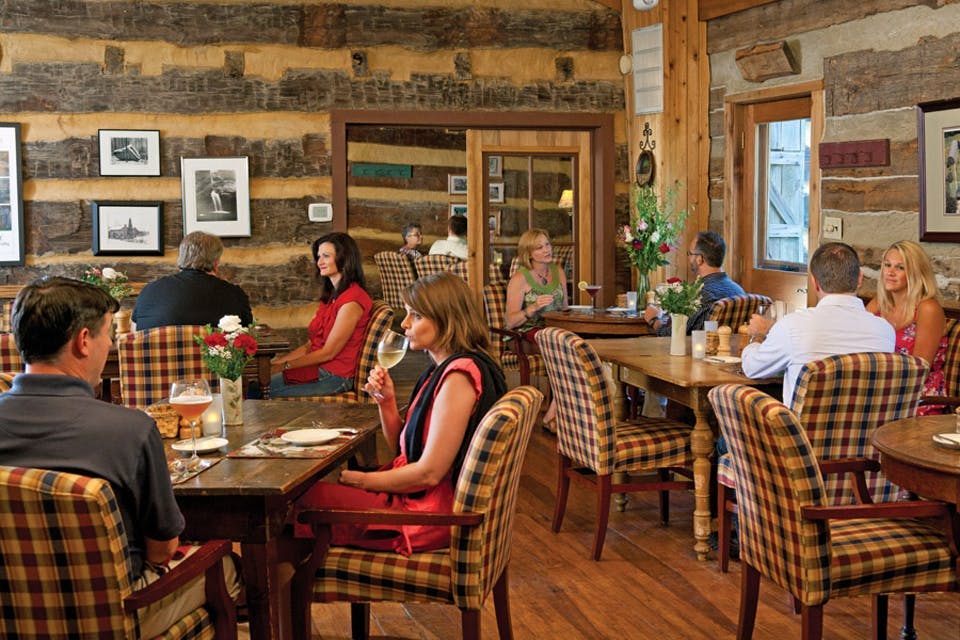
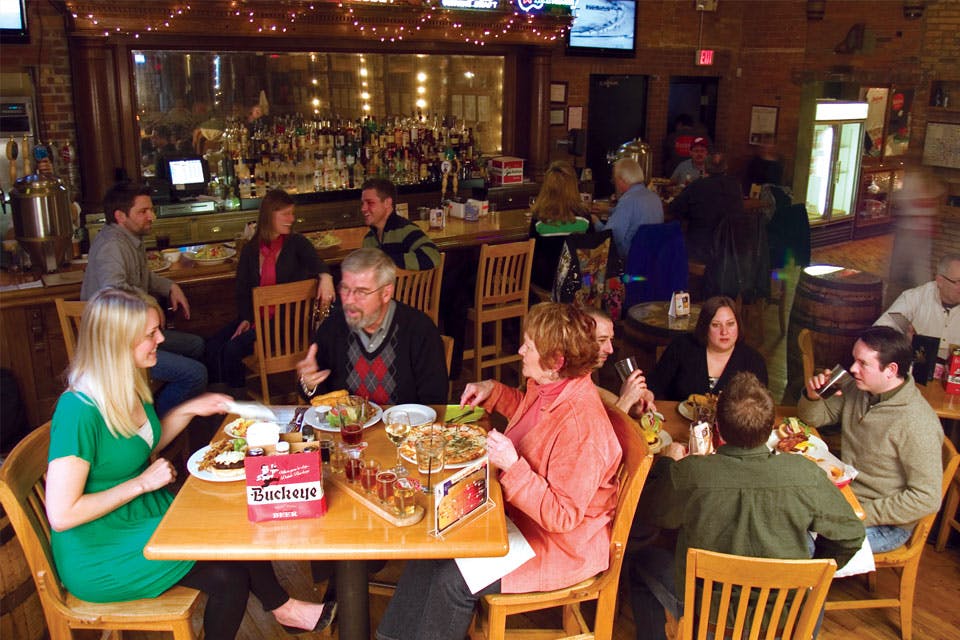
Finally, after a long day's drive, it's only a 15-minute trip back to Chardon and the Bass Lake Taverne and Inn, where you can have a fine meal on the patio and repair to a suite with a view of Chardon Lakes Golf Course. From the Kirtland Visitor's Center, take King Memorial Highway south into Geauga County, where the name changes to Mentor Road. Drive south to St. Rte. 44. Turn right on Rte. 44 and follow it through Chardon. You'll see Bass Lake Tavern on your right, just a few blocks south of that wedding-cake courthouse, where you started your tour.
Suggested Stops
• Century Village in Burton
• Ridgeview Farm near Middlefield
• End of the Commons General Store in Mesopotamia
• Historic Kirtland Visitors Center in Kirtland
• Bass Lake Taverne and Inn in Chardon
Southern Swing
Adams County's Amish Culture unfolds on a driving tour across hilly roads and through small town settlements.
By Ron Rollins
Mention to most Ohioans that you're planning a trip to the Amish country in the southern part of the state, and you'll likely get a blank look or a question like, "There are Amish down there?"
True enough, there are: a thriving, close-knit cluster of some 95 families who live, work and worship in the south-central portion of Adams County, which may be better known to people elsewhere as the home of the world-famous Serpent Mound, dating back to prehistoric Indian.
While this community of Old Order Amish isn't as well known as its counterpart in northern Ohio, its members are just as ready and willing to greet tourists and demonstrate the handiwork and homespun values that make the culture so fascinating to outsiders.
The Wheat Ridge Amish Community, as it calls itself, is relatively new to the region. The first Amish families moved into Adams County in 1976 from Rush County, Indiana. Others joined them from around the country, so that today the community supports four churches; three two-room parochial schools; and a bi-weekly newsletter, the Wheat Ridge Exchange.
Most of those first families arrived with the intention of farming, and indeed today you can see Amish farmers working the fields that sprawl prettily across the rolling, hilly terrain crisscrossed by Wheat Ridge and Unity roads. Today, few families are able to support themselves solely by farming, and Amish businesses dot the area — furniture-makers, woodworking shops, builders and cabinet-makers, bakeries and family markets.
"Adams County really isn't a top farming area; the soil is very clay-like and needs a lot of help," says Eli Hershberger Jr., who owns Hillside Bird's Nest, full of seed, birdhouses and feeders, at 35 Port Rd., just off Wheat Ridge Road. He moved to the Wheat Ridge community about a dozen years ago from Holmes County, and seems to like the slower, less-commercial pace in Adams County. "It's turning into a real touristy place up there now," he says.
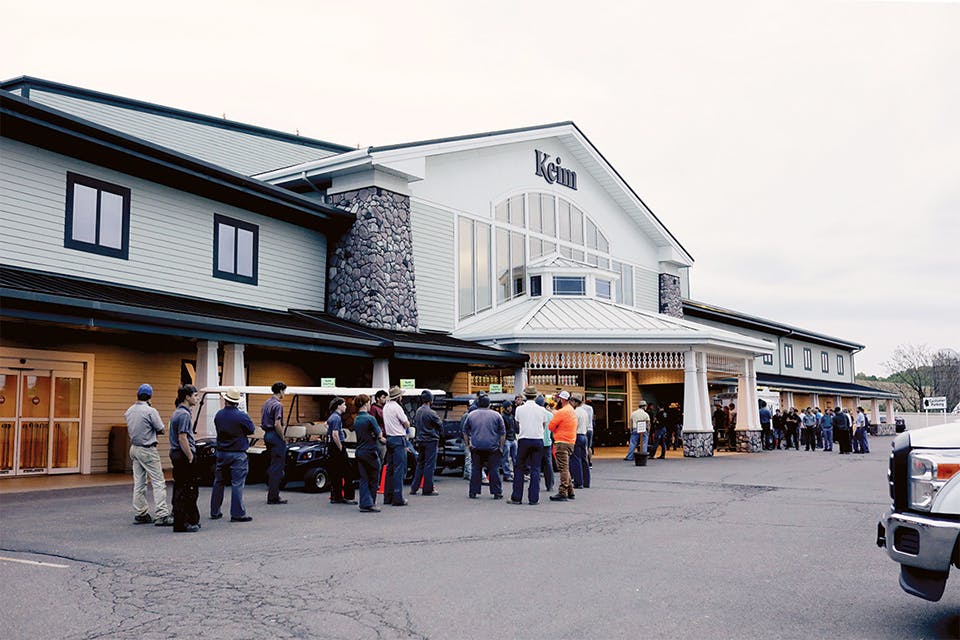
The route to travel to sample this area's Amish offerings starts at the junction of St. Rte. 32 and St. Rte. 247. Just southeast of the village of Seaman, drop in at Keim Family Market, right off Rte. 32 — which began when the family sold goods off the back of its buggy, and has grown to a large, rustic store that sells everything from Amish cheese to locally made baskets and furniture.
Take scenic, winding St. Rte. 247 from Seaman about 10 miles toward West Union, the county seat. If you like, you can download a map of the area ahead of time at
www.adamscountytravel.com, or you can stop by the Adams County Welcome Center at 110 N. Manchester St. downtown, and pick one up.
Unity and Wheat Ridge roads cross 247 between Seaman and West Union, and either one takes you east to the Amish businesses that dot the roadsides.
The biggest and best-known is the big Miller brothers' complex at 960 Wheat Ridge Rd. — a trio of stores that includes Miller's Furniture, Miller's Bakery and Gifts and Miller's Bulk Foods. In business for 30 years at the site, the family specializes in Amish craftsmanship that shows up in the dizzying array of handmade furniture on display in a large, meticulously tidy showroom. When you lift the lid on a cedar chest and smell the warm, woody aroma that arises, you won't be surprised that cedar is the county's top export.
Other businesses in the area worth visiting include Wheat Ridge Stoves, 1587 Wheat Ridge Rd., which sells the wood-burning kind; Countryside Furniture and Motion Clocks, 4153 Unity Rd., with a selection of outdoor furniture, wicker goods and decorative wood items; Unity Variety Store, 4399 Unity Rd., the spot for fabrics, glassware and toys; and Raber's Shoes and Saddlery, 5212 Unity Rd. When you stop in, note that in Amish stores, the lighting either comes in through the windows, or from a propane lantern. And when making your travel plans, remember: They're all closed on Sundays.
Suggested Stops
• Keim Family Market in Seaman
• Miller’s Bakery and Furniture in West Union
• Countryside Furniture and Motion Clocks and other shops in West Union
Be the first to leave a comment.