











Printer Friendly VersionEmail A FriendAdd ThisIncrease Text SizeDecrease Text Size
March 2007 Issue

Think Spring

Join us as we salute a new season with creative ideas for home, garden and cuisine.

{HOME}
Warm Welcome
March is a good time to greet the sunnier seasons by bringing outdoor themes into our homes.
By Jill Sell

{GARDEN}
Bring on the Buds
Experts provide a few early spring tasks for Ohioans who are eager to let the gardening games begin.
By Jill Sell

{WINE}
Make Us Blush

Toast spring with rose wine.
By Jenny Pavlasek

{CUISINE}
The Greeneer Grocery
This spring, make small changes in the way you grocery shop and reap big benefits for your health, community and planet.
By Jenny Pavlasak

Admirable Athens
Take a cue from the environmentally savvy community in southeast Ohio.
By Jenny Pavlasak

The Responsible Shopping Cart
The following "green" shopping tips were provided by Ohio University's Sonia Marcus and Whole Foods Market's Mark Smallwood.

Think Spring Slide Show


{HOME}
Warm Welcome

March is a good time to greet the sunnier seasons by bringing outdoor themes into our homes.
By Jill Sell

"I really enjoy the first time you can open all the windows."

Jon Blunt, ASID, an interior designer with Luken Interiors in Dayton, says there is no better way to welcome spring into a home.

But if Mother Nature is going to be a house guest soon, we want to be ready for her. That means making seasonal changes where we live and embracing spring themes, colors, textures and accessories that are as fresh and lovely as Ohio's flowering dogwoods.

First, a little preparation. It goes without saying that spring is a time for cleaning. We may not swat heavy area rugs with iron beaters, wash a layer of soot (a remnant of coal furnaces) from the ceiling or change heavy, dark drapes in the living room as homemakers before us did. But traditionally, we still look at spring as a clean start, a new beginning. "March is the month of expectations," wrote Emily Dickinson, and who would argue with a poet in spring?

"You need to clean because it puts you more in touch with your room," believes Linda Russell, IDS, with Russell Interior Design in Akron. "And by moving and rearranging the furniture, you get a whole different vantage point."

After dusting, let your mind drift to kite flying, pinwheels, redbud trees and small, but effective changes inside your home.

Consider the following:

  • The fireplace may be more of a backdrop than a focal point in spring, observes Russell. Fill the hearth with leafy potted plants or whimsical sculptures and turn the couch toward the windows instead.
  • Rattan and wicker have traditionally been used to make warm weather furniture. Often, sunrooms or all-season rooms are filled with lighter, airy loveseats, rockers and round tables all year round. But Russell likes the more updated thinking about "the indoor porch." She likes the look of classic wicker, but believes it should be combined with more traditional furniture that is in the home 12 months of the year. Use seasonal throws, area rugs and pillows to change the look of the room. The idea allows for a less jarring room-to-room transition, especially in homes with more open floor plans.
  • Today's versatile window treatments may be suitable for year-round use, but freshen them for spring with a charming brushed nickel tie-back in the shape of an ivy leaf or use a black antique iron rod that resembles a twisted twig. Tree themes are still very much with us for spring. Think table linens adorned with willow leaves, tree-trunk sink bases that look as if they belong in Hobbit houses, bedclothes that wrap us in oak leaves, and towel racks and shower rods that have a bark-like texture.
  • Change the art on walls or rotate items in a curio cabinet or on the mantle from a favorite collection. Start a new collection - small pieces of driftwood or rocks worn smooth and collected by the shores of Lake Erie.
  • Think birds, a theme more popular now than even last year. We adore whimsical birdhouses, wooden eggs, indoor bird baths, faux nests and vintage bird cages. And why not? Is there a more lovely sound than a wood thrush singing in an Ohio forest?

Blunt prefers to stay away from seasonal holiday themes when advising his clients about interior design, but says flowers are at the top of his list for bringing spring into a home. And don't worry, he says, if your personal preference doesn't lean to pastel colors, the "expected" shades of spring. Nothing is more gorgeous than a bright red tulip.

But if you didn't plant bulbs in containers last fall, it's a little late now for most indoor blooms, according to Barbara Arnold, a horticulture designer with Franklin Park Conservatory in Columbus. But the stunning paper white narcissus will bloom inside this spring, as will iris reticulata (Dutch iris) if you hurry.

"Of course, you can just buy forced bulbs from a florist or a garden center. All the hard work has been done for you," says Arnold, who also likes primula (primrose), which "look like African violets" in jewel tones of purple, red, blue and yellow. Cineraria can also jump-start spring indoors.

Bring inside branches from Ohio's flowering trees and shrubs, including pussy willows (everyone's favorite), crabapples, dogwood, flowering almond, spiraeas and red maples with their tiny red fuzzy flowers. Arnold suggests cutting a 15-to-24-inch branch from a tree or shrub and arranging it in a vase of water that is room temperature or cooler. Depending on the species, flowers should bloom in a few days to a few weeks.

Another idea: plant grass seed in a colorful little pot on a windowsill or in a large clear rectangular planter that shows the roots in potting soil and use as a centerpiece for a casual spring tabletop.

DuneCraft, a family-owned company located in Chagrin Falls, develops growing kits suitable for kids age 4 and up, but which has adult fans as well. The company's Micro-Terrariums are available in 11 themes and are a quick and easy way to bring nature inside. New this year are the Aromatic Eucalyptus, Fairies' Favorite Flower and Prehistoric Fern terrariums. Each comes with an egg-shaped container, seeds, sprouting mixture and educational information. (To order the $4.99 terrariums: 800/306-4168 or www.dunecraft.com.)

Sometimes a home needs more than just live plants and a change of accessories to chase away winter. That's when we break out the paintbrush and rollers, according to Becky Ralich Spak, senior designer for Sherwin-Williams, with offices in Cleveland.

"Yellow-green tones continue to be tremendously popular and they are a great way to bring nature inside for spring," says Ralich Spak. "Green is very comforting, very organic. The light shades of green make us feel good and allow us to use a multitude of accent colors." The designer also welcomes the green-blue, almost aqua palette that is emerging from behind the greens. She calls the blues "calming and relaxing." Add shades of purple, chocolate brown or classic white for spring and you have a room that pops.

Every spring has its own textures and themes. Ralich Spak says this year basket weaves are showing up in upholstered furniture, decorative pillows and other accessories. Don't be surprised to see reptile motifs on lamp bases or table legs. Spring peepers are alive and well in Ohio and in your home this March. Look for tiny toads and frogs decorating flower pots and even on tableware.

Ralich Spak says stone and wood are being used in home computer stations and home offices as a way to balance our high tech lives with the natural world.

Bringing authentic Ohio River rock, live plants or tree branches into our homes is the most obvious way to bring nature inside. But Ralich Spak believes nature doesn't have to be the real deal or even represented by the traditional color of what we see in the meadow or woods. Depending on a homeowner's tastes, a silver candlestick in the shape of a tree branch can create just as powerful a reflection of spring, she believes.

In spring, the days become longer and sunlight gets stronger. Those who are really serious about bringing more of the natural world into a home can add a skylight to a kitchen or bathroom. Or, replace two smaller windows with one larger one or add a bump-out window for a mini-greenhouse in the room of your choice.

Ohioans are fortunate to have four distinct seasons. Each contributes to the diversity of our natural world as well as the pleasure we gain from a changing landscape. In spring, we look forward to returning song birds, morel mushrooms in the woods and the first rowboats of the year on our lakes and ponds. In Ohio, spring is a short celebration. If we can capture it for a few more days in our homes, we are ever the more fortunate.


{GARDEN}
Bring on the Buds

Experts provide a few early spring tasks for Ohioans who are eager to let the gardening games begin.
By Jill Sell

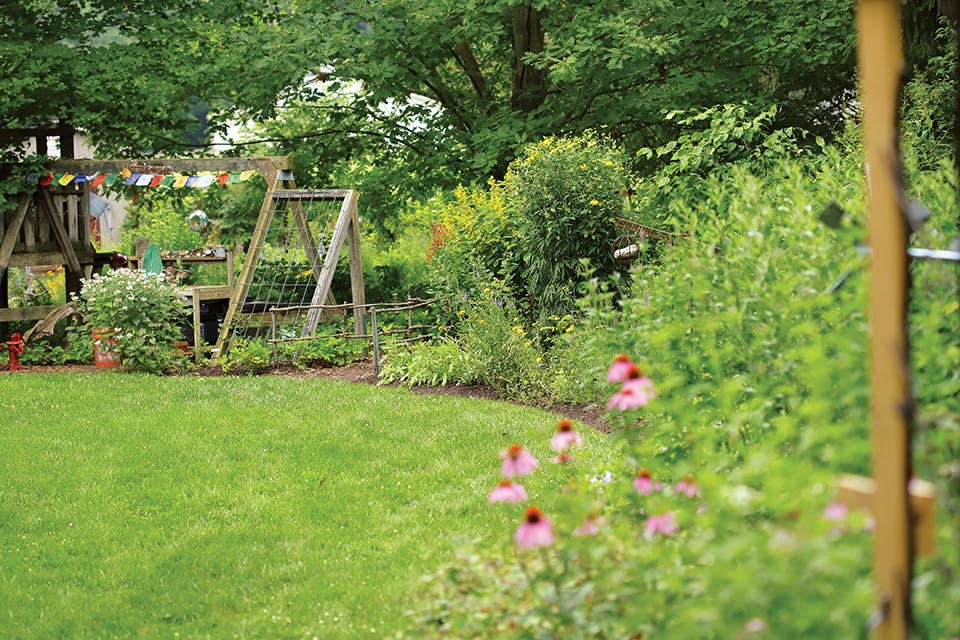
In March, you need patience. You begin to hear the irresistible call of the garden and feel the seductive pull of the rich, dark earth. Forsythia buds loosen their hold on the bright yellow confetti hidden inside them. Daffodil, crocus and tulip bulbs wake and stretch in their underground home.

The urge to dig, hoe and plant is strong at this time of year. But patience is needed, says Barbara Arnold, a horticultural designer with the Franklin Park Conservatory in Columbus. Most of Ohio's ground is still too cold and wet to plant. The night temperatures can freeze pea plants and pansies that are set out too early. Ice storms can crack the tender branches of saplings we want to plant. And grass seed sown with good intentions can wash away in an instant.

When Charles Dickens wrote, "It was one of those March days when the sun shines hot and the wind blows cold: when it is summer in the light and winter in the shade," surely he must have been talking about Ohio.

March days are unpredictable in the state. Some days we hide inside, skeptical that winter will ever end. Other days we work or play outside, when spring scents ride the air and cool winds race through our hair. Those are the days we rush to our yards to survey what winter has left behind.

We look at the flower beds and know that under the ice crystals and small pockets of snow, a new spring is ready to make its debut. And those are the days to accomplish simple tasks in the yard, to temporarily satisfy our spring lust. Arnold and other spring-hungry Ohioans make these suggestions for March:

  • Rake any leaves that escaped fall cleanup. Pick up sticks and downed branches. Resist the urge to mulch - it is too early.
  • Remove the burlap wrappings that were used over winter to protect shrubs and trees from wind or salt damage.
  • Stone walls and rock flower bed borders shift over the winter. Red bricks and pavers meander from their expected course in walkways. Replace the stones if it can easily be done and make a note of any cracked bricks. Put more major tasks on May's "to do" list.
  • Take a garden tool and power equipment inventory. Can you find your favorite pruning shears? Does the hoe need to be replaced? Are lawn mowers in good, safe running condition and are blades sharp? Ask your neighbor to kindly return the garden hose he borrowed last fall.
  • Stop drooling over the seed catalogs and place an order. Sketch the vegetable garden plot, remembering to rotate crops every couple of years. You can start hardy lettuce, maybe spinach and radishes toward the middle of the month, but only if the plants grow under protective plastic tents or in greenhouses. Arnold warns, too, of warm days in March with bright sunlight that can burn plants that live under plastic."Don't sow seeds until the days are constantly in the '50s," she says. In Cincinnati, that may be May 10. In Columbus it is around May 15 and in Cleveland it's not until May 30.
  • Although fall is still considered the best season to plant many trees, spring is certainly second best. Woody plants recommended for spring planting include dogwoods, tulip trees, willows, oaks, raspberries and blackberries.
  • This year, go native. Start small with just a few species that grow naturally in Ohio, including Virginia bluebells, yellow trout-lily, common blue violet, red oak or maidenhead fern. Or do a major landscape overhaul and begin to establish an Ohio prairie, meadow or even a small wetland.

Native plants have a number of advantages. According to the Ohio State University Extension, these plants are better adapted to local environments and may need less fertilizer, water and care. Native plants should be chosen for a specific site - wet or dry, sun or shade and soil type. "Naturescaping" often attracts song birds and other wildlife.

However, remember that taking wildflowers or any other plants from local, state and national parks is illegal. Some are endangered and need a specific environment in which to flourish. Instead, find other gardeners willing to share seeds or plants or order from a number of Ohio growers who specialize in native plants:

Earthscapes, Inc., 10403 St. Rte. 48, Loveland, OH 45140, 513/683-0144. www.earthscapesinc.com. Herbaceous native plants and Midwest flowers; landscaping and nursery services.

Envirotech Consultants, 5380 Twp. Rd. 143 N.E., Somerset, OH 43783, 740/743-1669. www.envirotechcon.com. More than 100 species of plants for naturescaping, native-plant gardens and prairies restorations.

Marvin's Organic Gardens, 2055 U.S. Rte. 42, Lebanon, OH 45036, 513/932-3319; www.marvinsorganicgardens.com. Chemical-free, native plants and landscaping services.

Naturally Native Nursery, 13737 St. Rte. 582, Bowling Green OH 43402, 419/833-2020. www.naturallynative.net. Native landscaping and plant source.

"In spring, at the end of the day, you should smell like dirt," says writer Margaret Atwood.

We are almost ready...


{WINE}
Make Us Blush
Toast spring with rose wine.
By Jenny Pavlasek

Like food, some wines have seasonal appeal. In winter we crave hearty cassoulets and cabernets. When spring hits, it's time for our dishes and our wines to lighten up. One wine that's a natural match with warmer temperatures is rosé. The best examples taste youthful and refreshing, and are incredibly adaptable when it comes to food. Put them next to light spring salads or meatier entrees such as ham, and these wines always step up.

Roses are thought of as pink, although the color can range from light salmon to an almost strawberry-Kool-Aid-like hue. For all wines, the color comes from keeping the juice in contact with the skins of the grapes after they're pressed. Generally speaking, the longer the contact time, the darker the color. Rosé wines are made from grapes that would normally produce a red wine, but shortened skin contact results in a softer color (there are other ways winemakers achieve a lighter color, including blending white wine and red wine together). Winemakers like to joke that rosé wines are half-made reds - which, along with the fact that they can be dry or sweet, still or sparkling and candid or demure, might explain why rosés appeal to a range of wine drinkers.

Here in Ohio, many winemakers opt to call their rose wine "blush," sometimes because they feel it's a more recognizable term, and sometimes because, as in the case of native pink Catawba grapes, the results will never be darker than bubblegum. Under both labels, these wines fare well with wine drinkers.

Winemaker Nick Ferrante, whose family-owned Ferrante Winery in Harpersfield Township sells four blush wines (plus an extra during the holidays), says his pink wines are hot sellers. "We sell about 11,000 cases of Jester's blush every year," says Ferrante. That figure is just shy of one quarter of the winery's total case sales. "I suppose you could say they're popular."


{CUISINE}
The Greeneer Grocery

This spring, make small changes in the way you grocery shop and reap big benefits for your health, community and planet.
By Jenny Pavlasak

Going green is in - again. Blame last year's big-farm spinach and lettuce scares. Or Hollywood, since ne

a name="Shopping">The Responsible Shopping Cart
The following "green" shopping tips were provided by Ohio University's Sonia Marcus and Whole Foods Market's Mark Smallwood.

* Bring your own bags (either cloth or reused grocery bags). The age-old question of whether to choose paper or plastic is best answered with "neither," says Marcus. Bringing your own bags to the stores cuts down on landfill waste and can sometimes save you money. Many grocery stores, including Aldi, which has 100 locations in Ohio, offer a discount to customers who bring their own bags. And don't forget: for single or easy-to-carry items, just say no.

* Cut back on meats. Meats are resource-intensive foods. The production of a one-pound steak in the U.S. requires as much water as a typical household uses in a month, says Marcus. Further, the resource-intensive practices used to grow our feed grain add on to the environmental load of meat eating. Do yourself and your planet a favor, she says, and cut back on meat in your diet.

* Buy local, buy organic, buy from smaller producers. Local foods travel shorter distances from producer to market, thereby cutting fuel costs, says Marcus. Organic foods require fewer oil-intensive inputs, such as chemical fertilizers. Smaller producers contribute to a vibrant local economy.

* Change the paper products you buy. Smallwood cites the Natural Resources Defense Council's Shoppers Guide to Home Tissue Products, which ranks paper brands based on their environmental impacts. The guide includes statistics such as how replacing just one roll of virgin fiber paper towels (70 sheets) with 100 percent recycled ones in every household in America could save 544,000 trees. For details, visit www.nrdc.org and click on Guide: Household Paper.

* Change a lightbulb. Seventy-five percent of the energy expended by a conventional incandescent lightbulb is given off in heat, not light, says Smallwood. By switching to compact fluorescent lightbulbs (CFLs), you'll save money and energy. Energy Star's Web site says switching one bulb to a CFL in each American household is equivalent to eliminating the emissions of nearly 800,000 cars.

* Make fewer car trips to the store by stocking up when you go. Transportation and eating are the two most oil-intensive activities that we participate in every day, according to Marcus. Cutting back on trips to the market or carpooling with a friend can be the quickest and best way to make your shopping more environmentally sound.

ws of Leonardo DiCaprio's hybrid car and the first-ever, post-Golden-Globes "Golden Green" celebrity bash - complete with organic food, recycled paper products and a tree planted in each attendee's honor - got plenty of play in the media.

Of course, this means that the dust cloud of information available to those seeking greener pastures is bigger than ever, making it a serious challenge to find practical ideas and thorough answers to the questions "where?," "why?" and most importantly, "how?"

In Ohio, with its wealth of agriculture - there were 77,600 farms in 2003, according to the Ohio Department of Agriculture - the most logical and accessible place for us to make greener choices is in the food we buy. Clearly, buying local, sustainable and organic has the trickle-down effect of reducing fuel consumption and water contamination, as well as bolstering the local economy. "It also connects you to that place," adds Carol Goland, the executive director of the Ohio Ecological Food and Farm Association (OEFFA). "And when you're connected to it, you take better care of it."

The grocery store is a weekly ritual for most of us, but food choices are just one way we can make this errand more eco-friendly. We consulted Sonia Marcus, the resource conservation coordinator for Ohio University, and Mark Smallwood, the green mission specialist for the Mid-Atlantic region of Whole Foods Market, for simple ways every shopper can make a difference. Smallwood, a Youngstown native and lifelong environmental educator, knows that Ohioans can't completely abandon the grocery store for the farmers' market. So, he spends his days helping the 30 Whole Foods Markets in his territory, which includes Ohio, be better members of the communities they serve.

"Our goal is '70 percent in '07,'" says Smallwood, explaining that 70 percent of the waste generated by Whole Foods stores this year will be composted, recycled or in some other way diverted from the landfill.

The company, which has one Columbus location and plans to open another store this month in University Heights near Cleveland, was founded on the commitment to selling organic and natural products. And it isn't the only Ohio grocery store as committed to selling green as it is being green. Others, including Kroger, Giant Eagle and Wild Oats Market and smaller shops like Mustard Seed Market (in northeast Ohio), are among those willing to listen to the concerns of the community and take action. And that's the point. "We've been shopping in grocery stores for years," agrees Smallwood. "It doesn't need to stop - it just needs to change."

Sometimes, all you have to do is ask.


Admirable Athens
Take a cue from the environmentally savvy community in southeast Ohio.
By Jenny Pavlasak

Take a cue from the environmentally savvy community in southeast Ohio.

When we envision the future of green living in Ohio, our eyes invariably turn toward Athens in the southeastern corner of the state. Not only does the city (and its surrounding communities) have the biggest and most successful year-round farmers' market in Ohio, but its college students eat off biodegradable plates at Ohio University's new Baker University Center, and it isn't uncommon to meet people who insulate their homes with tires or straw. The area is one of the best examples of how community-wide consciousness, especially in supporting local growers and producers, can have positive results.

One of the governing forces behind the area's green machine is the Appalachian Center for Economic Networks (ACEnet), an organization started in 1985 to create economic opportunity for worker-owned businesses in the area. While ACEnet's members are not required to be organic, most employ a high degree of organic and sustainable practices. Angie Cantrell, ACEnet's executive director, says that in the last four years members have put out more than 200 new food products, and for the last two years have generated more than $4 million for the local economy. Considering that the company's business model is being employed in places as far reaching as South Africa, it's likely that individuals and enterprises in other parts of the state might be interested in learning more. For more information, contact ACEnet, 740/592-3854, www.acenetworks.org.


Easy Being Green

Find local information fast through the following Ohio organizations:

The Ohio Ecological Food and Farm Association’s Good Earth Guide lists Ohio farms with retail facilities and community-supported agriculture throughout the state. The guide is available for $2 plus shipping by calling 614/421-2022, or access it for free by visiting

www.oeffa.org.

For a list of farmers’ markets, visit www.ohioproud.org and click on the "farm markets" link at the top of the page, or call 800/467-7683.

To find community-supported agriculture in your area, contact OEFFA or visit www.localharvest.org

For additional reading, "green" experts recommend the book An Omnivore's Dilemma: A Natural History of Four Meals (2006, The Penguin Press) by Michael Pollan.

Think Spring Slide Show

 
Related Categories


Subscribe
COMMENTS
Be the first to leave a comment.
ADD YOUR COMMENT


Copyright © 2013 Ohio Magazine All rights reserved. | webmaster@ohiomagazine.com
1422 Euclid Avenue Ste. 730 Cleveland OH 44115