

October 2009 Issue
Troop-Train Heroines
Although they couldn’t go off to combat, Troy’s Junior Girls Canteen volunteers faithfully served our country during World War II.
As quickly as it began, it was over.
Maybe it had something to do with the fact that the Junior Girls Canteen of Troy began almost by accident — a curious girl here, a stolen magazine there. The preteen and teenage girls of Troy were heroines-in-the-making when they rode their bikes to what is now Herrlinger Park to meet the troop trains and, yes, flirt with the soldiers passing through on their way to and from Europe during World War II.
The cramped trains of the B & O Railroad would stop only briefly in Troy for water. With no food or games on board, the servicemen were desperate for a friendly face and a diversion — and received both from the young residents of the southwest Ohio town. The girls happily obliged the troops’ requests for reading materials for their long journey: One by one, the girls grabbed their parents’ newspapers and magazines from home, threw them into their bicycle baskets and pedaled to the West Street station.
A few adults, curious as to the whereabouts of both their daughters and their publications, followed them down to the station one day. What they saw drove them to action.
“The troop trains, all they had were these hard seats — they weren’t plush at all,” says Phyllis Shane Gass, one of the original 40 or so women who made up the Junior Girls Canteen, whose members, ages 6 to 16, comprised the youngest canteen in the country. “They would travel for hundreds of miles ... without food. I could not believe that they wouldn’t feed those guys.”
Neither could Mary Tooley, one of the neighborhood mothers who followed the girls to the tracks one day. She spread the word and neighbors sprang to action, baking cookies to pass through the windows of the trains during their brief stops.
Whether it was shock at the troops’ traveling conditions, the patriotic fervor of that period, or the hospitable nature of the people of Troy, the town gained renown for its generosity.
Between 1943 and 1946, an estimated 600,000 soldiers discovered the comforts of home at the station — from candy bars, homemade food and crossword puzzles to shaving supplies and cigarettes — all served to them by the canteen girls.
“People turned over their rationing stamps to us for food,” says Patricia Kirkland Beam, another member of the Junior Girls Canteen, still in awe of residents’ extraordinary support more than 60 years ago.
After Mary Tooley’s cookie-baking effort, word spread quickly and area companies began donating supplies in bulk for the soldiers. Miriam Hartzell, whose husband was president of Hartzell Propellers in Piqua, had her cook prepare extra filling for sandwiches. A popular pie company, Blue Bird, donated single-serving pies and the Tip-Top potato chip factory offered chips.
The girls filled bags and baskets, running for each train, sometimes barely making it in time to pass the goodies through the window and load up for the next batch of soldiers. A system of flags told the girls if the trains were carrying POWs (which meant they couldn’t approach the passengers), when the next train was coming and how close it was.
According to Doris McMath Hislop, another canteen member, the girls had extra bags of food in case trains arrived back to back, which was often the case.
“Sometimes we were huffing and puffing, carrying bags to get across the tracks,” she says. “There was always excitement when we knew there was going to be a troop train coming.”
No matter the weather or the time of day, they never missed a train.
“I remember one night it was so terribly, bitterly cold and we were on Christmas vacation, and the snow was so deep,” says Hislop. “We waited outside for quite some time, probably because [the train] didn’t arrive as soon as expected.”
But the girls never complained.
Of course, everyone had different reasons for participating. “A few children in the neighborhood said, ‘Oh, you’ve got to go down and wave at all the cute soldiers when the troop trains come through,’” says Beam.
Beam loved hanging out on the platform and chatting with the soldiers. However, her motivation was much more personal.
“I got involved with it because I had a cousin who was in the service, and he went AWOL to see his wife and his new daughter in the hospital because he knew he was going to get sent overseas,” she says. After meeting his new daughter, the soldier did, in fact, get sent abroad. He was killed during the Battle of the Bulge.
“I always hoped that somebody, somewhere along the line, did something for him like we did for the soldiers here,” she says.
Modest Beginnings
As the demand for supplies spread, donations grew. The canteen girls needed better facilities for their volunteer work.
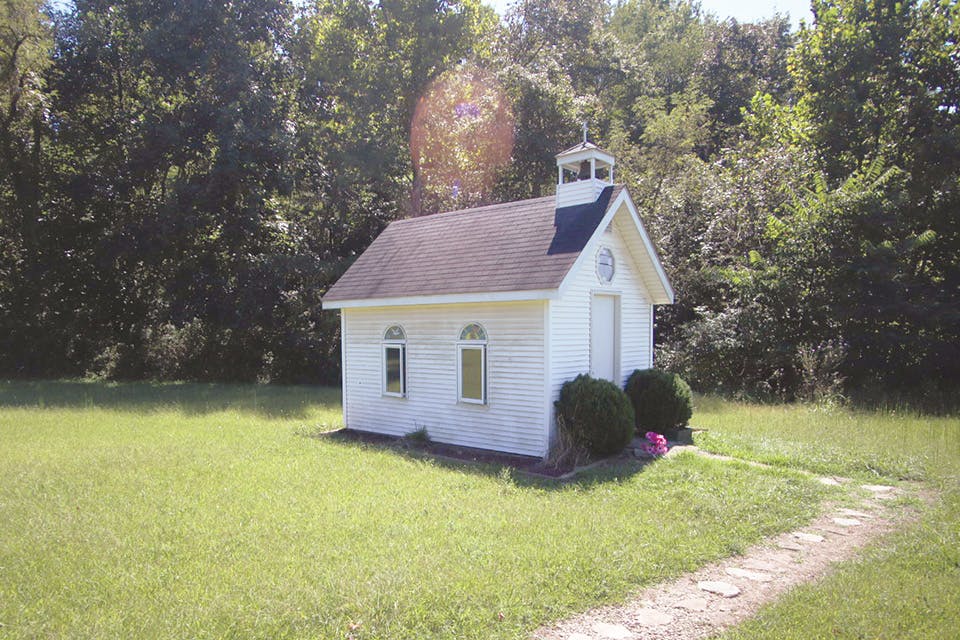
There was a small shelter in the park that had no electricity, windows or heat. But after receiving permission from the city, volunteers put in electricity, and residents donated a refrigerator, picnic tables and even a meat grinder for the girls.
Hislop, who gave up a paying paper route to join the Junior Girls Canteen, remembers using a lot of peanut butter and mayonnaise, and all the girls talk about the “ham salad” sandwiches they made by grinding bologna.
“Mary Lee (Mumford Clawson, another canteen girl) can’t eat bologna to this day,” Gass says with a laugh. “I remember the pimento cheese sandwiches because we didn’t have them at home and I loved them.”
With the help of Tooley and eight other mothers, the girls had the system down to a science. A few would sort through the games and reading materials, while others formed a sandwich-making assembly line on an oilcloth-covered picnic table. They would place everything into bags or baskets labeled with the name and address of the station, and the baskets were always returned.
All of the girls’ efforts were greatly appreciated. Soldiers sent letters of gratitude and tokens of thanks to the canteen.
Although they weren’t supposed to get on the trains or interact with the soldiers, many of the canteen girls slipped addresses through the windows and accepted patches often ripped directly off a uniform as the trains left the station.
“Girls wore blue jeans and red flannel shirts, or cast-offs of their fathers and brothers,” says Hislop. “Marilyn (Chase Overholser, a deceased canteen girl) collected all these insignias that she sewed on and covered her shirt.”
“I was too bashful and my mother would have killed me,” says Gass, but Hislop admits to corresponding with a few soldiers, mainly describing in her letters what she did in school and with the canteen.
“They were really hungry just to hear from people from home,” she says.
Heaped With Honors
Once the war ended and the troop trains stopped, the girls moved on and most of them didn’t keep in touch. But when the Troy Historical Society mentioned something to Scott D. Trostel, historian and author of numerous books about railroads and canteens, the girls were again reminded of what they did during the war.
From there, “It snowballed — just like the canteen did,” says Gass.
In November of 2006, the ladies were invited to a Veterans Day commemoration that included the dedication of an Ohio Historical Society marker honoring the Junior Girls Canteen.
“We’ve been in parades every year,” says Gass. Aside from numerous speaking engagements, they’ve also received countless letters — including one from George W. Bush — and in 2007 they received the Humanitarian of the Year Organization award from the Northern Miami Valley Chapter of the American Red Cross, among other honors.
Beam talks about the flyover during the historical marker dedication, when the pilots insisted on meeting the canteen girls. She was in awe of them and they were equally in awe of the women, thanking them for the support they gave troops over 60 years ago.
Although it’s clear that the women made a lasting impact on both the soldiers and the community, they refuse to see their accomplishments as anything remarkable, remaining modest despite all the accolades.
“It just always made me feel so good to see those guys laughing and so happy when they pulled away from the station,” says Beam.
Hislop agrees: “That’s worth more than a couple of dollars you might have missed out on with a paper route.”
Be the first to leave a comment.