





December 2005
Warming Up to Winter
Stark County's Wilderness Center offers countless opportunities to commune with the season.
Randall Edwards
As winter settles in on rural Stark County, wet leaves form a dark mat over the trails at The Wilderness Center. Cold wind rattles the bare branches of the young hardwoods and black snakes crawl into crevices in the weathered limestone hills. "They go in there and ball up and go to sleep, and they don't come out again until spring," explains Tom Kane, a volunteer and member of the board of directors for the conservation and outdoor education center.
Kane, a retired high school physics teacher, feels some empathy with his reptilian brethren. He's not a huge fan of winter, either. "There are some things to recommend it," he admits, casting a skeptical eye at the visitor who has suggested that winter can be the best time to be outdoors. For the most part, Kane would just as soon be back home, dreaming of summertime canoe trips and walks under the cool canopy of a deep woods.
Winter retreat is not always an option for Kane, however. The skills he gained from years of teaching high school physics are in great demand at The Wilderness Center's primary location, a 619-acre site near Wilmot, about 20 miles southwest of Canton. He takes school groups into the woods year-round to study natural science. In winter, the focus is on wildlife survival techniques. When the ice on the wetland pond is thick enough to be very safe, he walks the kids out over the frozen surface and cuts a hole through it. "You want to see something that'll make the teachers scatter, chop a hole in the ice while they are standing on it," he says, chuckling. "The kids look into the hole and say, 'cool.' But the teachers just back away."
Once he has an opening, Kane invites the students to measure the temperature of the air above the ice, the water just below the ice and the water at the bottom of the pond. The readings tell the secret of winter survival for the fish that live in the pond. "The water at the bottom stays at 45, 55 degrees Fahrenheit all winter long," he says, "even when the air temperature is at zero."
Watching for what happens just below the surface is the key to Kane's winter programs, as it is the secret to enjoying the winter woods. The snakes and many amphibians may be in hibernation, he says, but in Ohio, most wildlife is simply hidden, perhaps dozing, waiting for a sunny day.
Kane stops on a walk along one of the trails to explore a groundhog warren. There are numerous holes, but they seem unused. "Oh, they're in there," he says. "They stay down there most of the winter, eating and sleeping. On fair, good days, they'll come out and whistle at each other."
Founded in 1964, the Wilderness Center began humbly when volunteers, with the support of the Stark County Audubon Society, purchased the century-old woods on the old Segrist farm and founded an organization to protect it. Since then the center has grown to a full-service outdoor recreation and nature education facility, serving nearly 7,000 students each year in programs on the site, and thousands more at outreach programs in schools in four counties. There are more than a dozen clubs associated with the center, catering to adults with interests as varied as fly fishing and astronomy.
True to its land-trust roots, however, the organization has continued to protect land, mostly in the Sugar Creek watershed. Through outright purchase or by conservation easement, the organization is credited with protecting more than 2,000 acres in six counties.
"No summer is long enough to take away the winter. The winter always comes," writes Barry Lopez in Arctic Dreams. It's as true in Wilmot as it is in the Yukon. Maybe more so, because the longer and balmier the summer, the more we feel robbed when October's sunny afternoons turn to November's grim clouds which, in December, become stony and unforgiving and throw down rain, sleet and snow. Some of us respond to the colder months by curling up like snakes in our urban crevices, stoking the fireplace and waiting for the longer, warmer days to revive our interest in the outdoors. It's just plain hard, getting out in the winter. As the solstice nears, workdays devour most of the limited daylight, and we're reluctant to battle ice and snow on the roads on the days when our employers don't require it.
Still, winter has some things to recommend it, as Kane would say, especially for those who appreciate solitude, a sparse landscape and the small pleasures of subtle changes in the light, ice-crystal sketches on tree leaves and the way birds puff up their feathers to keep warm. Besides, getting out into the daylight revives the metabolism and reminds us that all creation is powered by the sun, even when that sun is a dim, gauzy bulb that sheds a watered-down light and little heat.
The Wilderness Center is as good a place as any for a winter walk. Nestled amid Amish farms and small Ohio towns, even the journey there provides a respite from the chaos of the winter holidays. Kane says the trails, which are open year-round, are fairly lonely in the winter. Most days, cold hikers can warm their toes in the shelter of the Interpretive Center, a two-story nature center filled with natural light and interesting exhibits (especially for children), and a bookstore filled with field guides and educational toys.
Ten miles of hiking trails wind through a variety of habitats, including a restored prairie, a wetland, and a young forest, which seems dense and dark. Tall, skinny trunks of maple, oak and cherry trees, none more than 40 years old, crowd each other, straining for the best exposure to the sun. Kane, whose father was a founding member of the center's board of trustees and who has been walking these trails since his youth, recalls when this land looked quite different.
"This was all potato field when we took it over in 1964. Now it's a young forest, and it's done it all by itself," he explains. "We did no planting. It's just natural regrowth."
Birds scatter when approached: At least 30 species winter here, and the place generally scores well in Audubon's Christmas Bird Count. Kane is not a birder, but the support of the Audubon Society during The Wilderness Center's early days is reflected in the bookstore, where the shelves are stocked with bird feed and feeders. Some birds are very abundant and can be seen more easily without leaf cover. Others might need some coaxing. For that, head on into the interpretive building and visit the Wildlife Room, an observation area with large windows that look out into a feeder area. Microphones secured to the side of the building pick up bird calls and pipe them indoors.
Back outside, on the other side of the property is the Segrist Woods Trail, which takes hikers through the oldest forest on the property. Kane's father and his friends were aiming to save these woods from logging when they launched The Wilderness Center more than 40 years ago, and it's easy to see why. Forests like this one are rare in Ohio. Trees that have stood since before the American Revolution cast millions of acorns and hickory nuts on the ground. They crunch underfoot, but provide important food for the forest animals. The robust knocking of a woodpecker reverberates through the woods. Lichens, mosses and fungi cover the downed trunks of fallen trees.
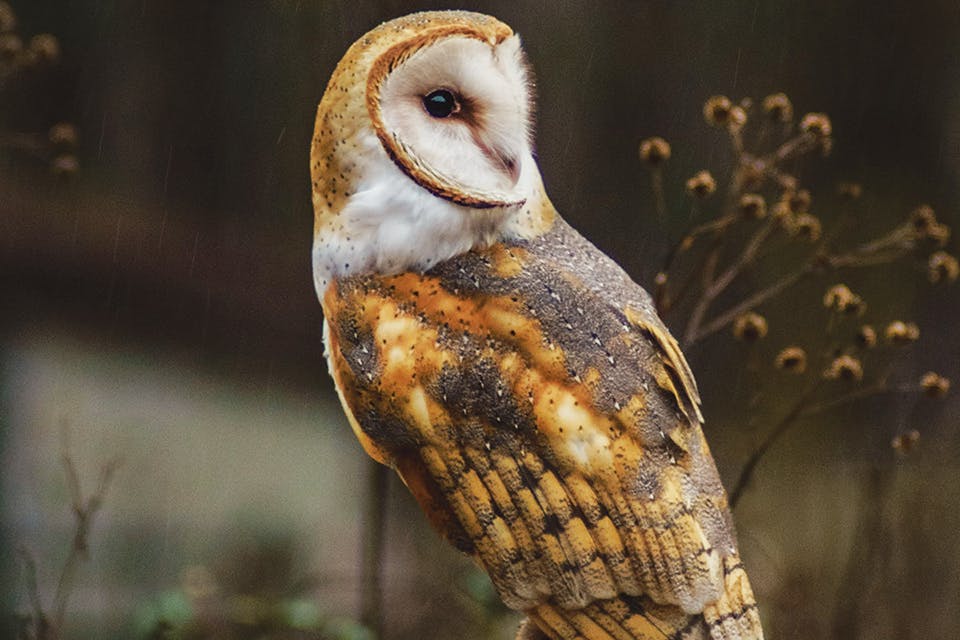
"No matter what I am doing with the kids, I like to talk about change," Kane says. "I tell them, sure, it looks like this now, but come back in 10 years, and everything will be different. The older trees will die, and the owls, opossums and raccoons can make homes in the snags. The dead tree will open up a space in the canopy, and one of these smaller trees will shoot up to catch the sun."
And winter will give way to spring, which will ease into summer, and the quiet emptiness of winter will again be filled with the rowdy sounds of children. And the old potato fields of The Wilderness Center will continue to evolve into forests for the enjoyment of schoolchildren for generations to come.
Be the first to leave a comment.